

By Onyekachi Victoria Philip
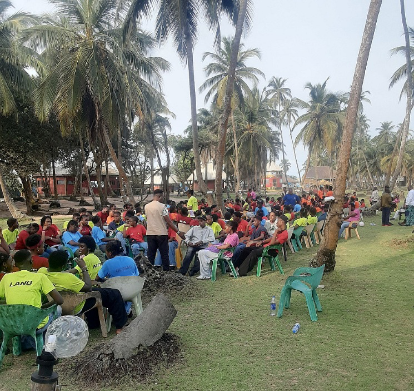
The third product in Otunba Wanle Akinboboye’s 52 Tourism Products is Kamp Afrika and this was released for week 3, running from Friday, October 27th to Friday, November 3rd,2023.
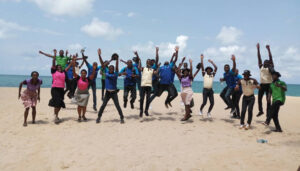
Kamp Africa represents Akinboboye’s attempt to use tourism as a tool for cultural preservation, practical education, recreation and youth development.
What exactly is Kamp Afrika?
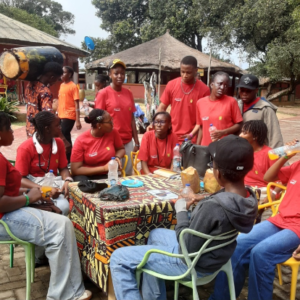
Kamp Afrika was conceived as a Pan-African cultural and tourism camp for children and young people and its fundamental design was cultural disconnection.
When introducing the product, Akinboboye argued that Western cultural influence had increasingly disconnected African youths from their own culture and that parents also had a responsibility to deliberately expose children to African traditions.His solution was not simply to teach children African history in a classroom but instead , Kamp Afrika turns African culture into an experience.
A child can:
- eat African food;
- wear African clothing;
- learn African dances;
- hear African stories;
- make beads;
- weave baskets;
- learn African languages;
- play African music;
- interact with nature;
- participate in traditional crafts;
- swim and play sports
- Make friends while doing all of these things.
The problem behind the product
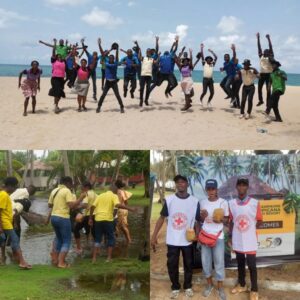
Kamp Afrika was created around a question:
How do you make the next generation love and understand Africa when they are increasingly exposed to foreign cultures?
Akinboboye’s answer was to make African culture attractive, entertaining and experiential.
Rather than telling a child:
“You need to know your culture.”
Kamp Afrika effectively says:
Come and experience it.
The child encounters African food, music, clothes, language, crafts, stories, nature and games in one environment.
That is an important tourism-development strategy because children who grow up appreciating African destinations and culture can potentially become future tourists, tourism entrepreneurs, cultural ambassadors and destination promoters.
What happens at Kamp Afrika?
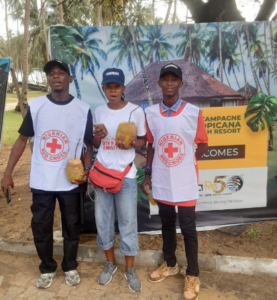
Young people were expected to learn or experience:
African culture
- African dressing
- African food preparation
- African history
- African dances
- African languages
- African storytelling
- Folklores
- African percussion
- African music
Traditional crafts
- Basket making
- Basket weaving
- Bead making
- Tie and dye
- Craft making
Nature and animals
Children would be exposed to natural environments and local animals including goats, sheep and chickens.
The intention was to help them develop a relationship with nature and the African environment, rather than seeing tourism simply as visiting buildings and attractions.
Recreation
The programme also included:
- Swimming
- Water aerobics
- Beach football
- Five-a-side beach football
- Volleyball
- Aim-the-bucket
- Other recreational activities.
The locations were bigger than one resort
This is one of the most interesting aspects of the original Kamp Afrika concept.
It was not designed to exist only at one location.
The 2023 announcement identified potential camp environments across Africa and the Caribbean, including:
- La Campagne Tropicana Beach Resort, Ibeju-Lekki, Lagos
- La Campagne Tropicana Forest, Hills and Cave Resort, Ondo
- La Campagne Mountain and River Resort, Koton Karfi
- La Campagne Tropicana Hot Spring Resort, Ethiopia
- Destination Quidah
- Destination Akosombo
- Destination Grand-Bassam
- Destination Gorée Island
- Destination Al-Nejashi
- locations in the Caribbean
Different camp durations were also proposed, including:
- One-day camps
- Two-day camps
- One-week camps
- Two-week camps
This is important because it reveals that Kamp Afrika was conceived as a Pan-African tourism network, not merely a summer programme at La Campagne Tropicana.
The La Campagne Tropicana connection
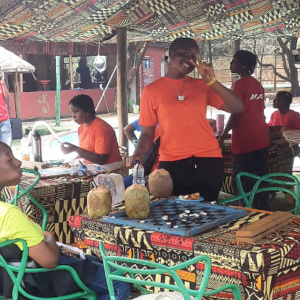
La Campagne Tropicana was the principal Nigerian environment associated with the product.
The resort’s own current Kamp Afrika page describes it as a Pan-African summer camp for tweens and teens aged 10–16, designed around African culture, adventure, recreation, crafts, storytelling, arts and theatre.
The resort provides a particularly suitable environment because of its combination of:
- beach;
- lagoon;
- tropical gardens;
- mangrove;
- African-themed architecture;
- sports facilities;
- accommodation;
- security;
- food and hospitality infrastructure.
The current resort description says the camp accommodates children in same-gender groups in chalets, while the package includes accommodation, meals, safety/security and medical arrangements.
This means Kamp Afrika has evolved from the concept announced in 2023 into a structured camp offering at La Campagne Tropicana.
The current Kamp Afrika programme
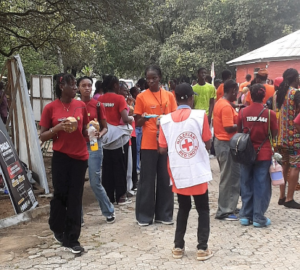
This is where the research becomes particularly interesting.
The current La Campagne Tropicana programme is more specifically positioned toward tweens and teenagers aged 10–16, rather than the much broader youth range sometimes associated with Akinboboye’s other youth products.
The resort describes the programme as an Africa-centric educational project for children of African descent living both on the continent and in the diaspora, as well as people who simply love Africa.
The programme includes:
Music and performance
- Bata
- Gan-gan
- Ekwe
- Gbedu
- Konga
- Djembe
- Stage plays
- Singing
- African dancing
- Chanting/Ewi
- Stand-up comedy
Storytelling and cultural expression
- Storytelling
- African fabric expression
- African folklore
- Cultural presentations
Recreation
- Cinema
- Picnic
- Swimming
- Tours
- Bonfire storytelling
- Live musical shows
The programme also allows campers to interact with family members during designated family activities.
So the product has retained its original philosophy while becoming more structured as an actual camp experience.
It is also an entrepreneurship product
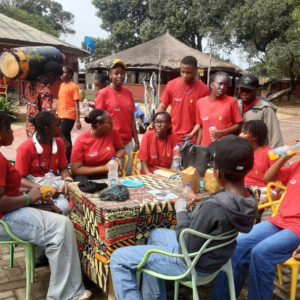
Kamp Afrika was not designed solely for La Campagne Tropicana to operate itself. Akinboboye explicitly said the product could become a business platform for Youth Tourism Entrepreneurs.
Interested entrepreneurs could:
- Approach schools and clubs.
- Enrol children for Kamp Afrika.
- Use participating tourism facilities.
- Organise the experience.
- Earn commissions.
Why the franchise model matters
The original announcement specifically mentioned partnerships with tourism organisations interested in franchising Kamp Afrika.That means the concept was designed to be replicable.
Imagine a tourism entrepreneur in another African country taking the Kamp Afrika concept and adapting it to their own environment:
Kamp Afrika Nigeria – Kamp Afrika Ghana – Kamp Afrika Ethiopia – Kamp Afrika Senegal – Kamp Afrika Caribbean
Kamp Afrika and cultural preservation
There is a deeper cultural argument behind the product.
Africa’s tourism industry is often marketed through:
- beaches;
- wildlife;
- historical sites;
- monuments;
- hotels;
- festivals.
The African child becomes part of the tourism experience.Instead of culture being something displayed for tourists, children become participants in the culture.
For example, learning how to make a traditional craft gives a child a practical connection with an aspect of African heritage.
- Learning an African drum creates a physical connection with music.
- Listening to folklore creates a connection with oral history.
- Learning African food preparation creates a connection with cuisine.
- Learning African languages creates a connection with identity and communication.
- That is why the product has an educational significance beyond tourism.
Why the product targets children
There is a strategic reason for starting young.
A child who repeatedly experiences:
African food – African music – African stories – African destinations – African friends
can develop a positive emotional relationship with the continent.
That child could eventually become:
- a repeat tourist;
- a tourism entrepreneur;
- a hospitality professional;
- an investor;
- a cultural ambassador;
- a destination marketer.
In other words, Kamp Afrika is investing in future tourism demand and future tourism supply simultaneously.
Kamp Afrika and the diaspora
The diaspora component should not be overlooked.
The current La Campagne Tropicana description specifically says the project is for pupils of African descent living on the continent and in the diaspora, as well as lovers of Africa. Kamp Afrika takes that connection down to the next generation.
A diaspora family can potentially send its children to Nigeria or another African destination to experience the continent in an organised and safe environment.
So the first three products form an interesting progression:
DNERP – diaspora economic reconnection
YATE – youth tourism and entrepreneurship
Kamp Afrika – cultural immersion and childhood connection to Africa
What happened after the original 2023 launch?
The product did not simply disappear after its launch week.The most significant evidence is the continued operation and promotion of Kamp Afrika at La Campagne Tropicana.
A very recent August 27th 2026 report from Atunda TV documents children and families arriving at La Campagne Tropicana for the summer programme and specifically states that “all roads led to Kamp Afrika” as children closed from school for the summer holiday.
This provides evidence that Kamp Afrika is still being used as an actual tourism and children’s programme in 2026, rather than existing only as a 2023 announcement.
A separate August 2026 Atunda TV report also describes Kamp Afrika as part of Akinboboye’s continuing youth agenda and reiterates that it was the third of the 52 tourism products.
What makes Kamp Afrika different from YATE?
The two products are related, but they are not identical.