
By Damilola Adeyera
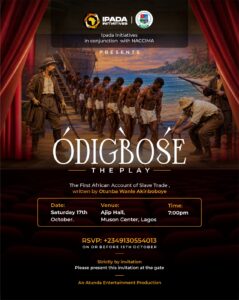
Otunba Olawanle Akinboboye is putting the finishing touches to another ambitious creative project as he supervises final rehearsals ahead of the premiere of Odigbose, a historical drama that seeks to offer a distinctive artistic account of the slave trade era in Africa.
The founder of La Campagne Tropicana Beach & Forest Resort describes the production as an unarguably original account of the period, expressing confidence that the work will provide a reference point for generations to come on the importance of authentic storytelling through film and theatre.
“Take five! Number one, action!”
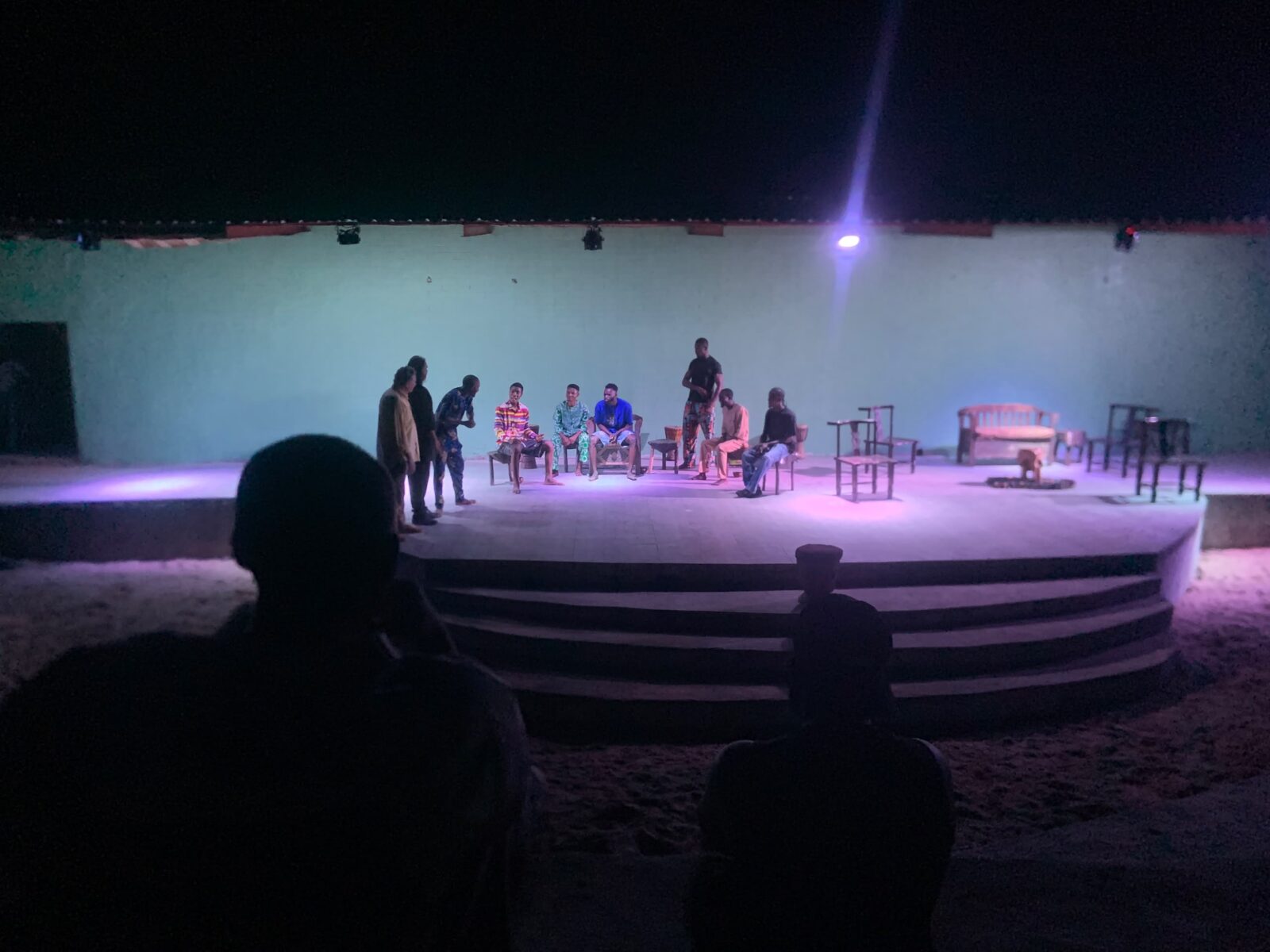
The familiar commands of a film director punctuate the rehearsal session as Otunba Olawanle Akinboboye assumes his place behind the scenes, carefully observing the actors and issuing instructions to refine their performances.
Then the flute sounds signaling the beginning of rehearsals.
In the village of Ulumila, the story begins to unfold.
With a keen eye for detail and an imagination that seems to draw from an endless well of creativity, Otunba Olawanle Akinboboye watches as the world of Odigbose comes alive before him.
Every movement, stance, expression and spoken line becomes part of a larger artistic vision.
For a moment, the rehearsal room ceases to be merely a rehearsal space. The audience is transported into the unfolding drama, drawn into a world shaped by the characters.
“Damilare!” Otunba Olawanle Akinboboye calls out, drawing attention to a particular detail that requires correction.
The rehearsal pauses briefly as he communicates his observations. The actors listen, adjustments are made, and the scene continues.
Otunba’s attention is relentless. Nothing appears too small to escape scrutiny, whether it is the positioning of an actor, the delivery of a line or the emotional intensity required to carry a scene.
As the drama approaches its climax, the atmosphere grows increasingly intense. The queen mourns the banishment of Kosegbe from the land of Ulumila, and the grief becomes palpable.
“Kosegbe do Ara igbo,” comes the evocative Yoruba expression, carrying the emotional weight of a mother’s lament. “Abiyamo tooto”, the Yorubas will say to describe the Queen’s reaction.
The scene captures the sorrow, anguish and cultural texture that give the production its dramatic force. Through the actors’ performances, the audience is invited to feel the pain of separation and the consequences of events unfolding within the fictional world of the play.
Otunba Olawanle Akinboboye allows the rehearsal to proceed, watching closely.
At moments, he appears pleased with what he sees. At others, he offers corrections, ensuring that the performers remain faithful to the emotional demands of the story.
Every gesture matters. Every expression counts. Every line contributes to the larger picture.
Then comes a moment when the actors’ call becomes almost irresistible.
“Ẹ gba mi pátẹ́wọ́ fún wọ́n!”
The invitation to applaud draws a spontaneous response. Before long, you find your hands clapping, by this time the energy of the performance has crossed the invisible boundary between the actors and those watching. You’re now a participant
It is a glimpse of the immersive experience Odigbose hopes to deliver when it finally reaches its audience tomorrow at the Ajip Hall of Muson Centre.
Only a few days earlier, Otunba Olawanle Akinboboye had been away with members of his team, camping around the hills and caves of Itanla as work continued towards the relaunch of La Campagne Tropicana Forest Hills Cave Resort Itanla, Ondo State.
Now, he has turned his attention to another landscape entirely: the world of historical drama.
From the hills and caves of Itanla to the rehearsal space of Odigbose, the transition underscores the breadth of his current creative pursuits.
Today, Otunba Olawanle Akinboboye is in his director’s seat, guiding a production that seeks to engage audiences with one of the most consequential chapters in African history. Tomorrow, you might find Him in the Land of Origins, Ethiopia captain the Almagamation of East and West Africa.
“Take five! Four, three, two, one. Action!”
The instructions Otunba Olawanle Akinboboye come again as the cast returns to work.
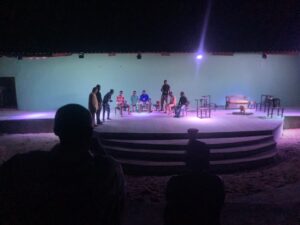
Otunba Olawanle Akinboboye watches, listens and evaluates. When a performance meets his expectations, his smile offers a quiet indication of satisfaction. Sometimes, he claps to acknowledge a job well done.
The process continues, scene after scene, as the production moves closer to its premiere at the Agip Recital Hall of the MUSON Centre.
With the premiere approaching, the final rehearsals offer a glimpse into the work behind the spectacle: the repeated takes, the corrections, the emotional demands on the cast and the persistent pursuit of a convincing performance.
And as Otunba Olawanle Akinboboye calls for another take, one thing is clear: the journey to bringing Odigbose before an audience is entering its decisive stage.