

By Damilola Adeyera
For anyone worth their onions, when a new idea is set to achieve something unprecedented, it is imperative to research what has come before, understand what made previous efforts successful, and identify what can be done differently to surpass them.
The same rigorous review was undertaken when the masterminds behind Ipada Celebrations agreed to pursue the idea. The team at Motherland Beckons, the organisation behind the festival, exclusively revealed to Atunda TV how it studied more than 100 festivals around the world to develop the blueprint for Ipada Celebrations.
The question, then, is simple: what exactly is Ipada Celebrations, and what makes it different from the numerous festivals already commanding global attention?
Consider Rolling Loud, which has built an international reputation as a major destination for hip-hop enthusiasts, bringing together music, fashion and youth culture.
Consider Afro Nation, which has established itself as a global platform for Afrobeats, African music and the wider African cultural experience.
Both have demonstrated the power of music festivals to unite people across geographical boundaries, attract international audiences and create economic opportunities.
Ipada Celebrations seeks to tell a different story.
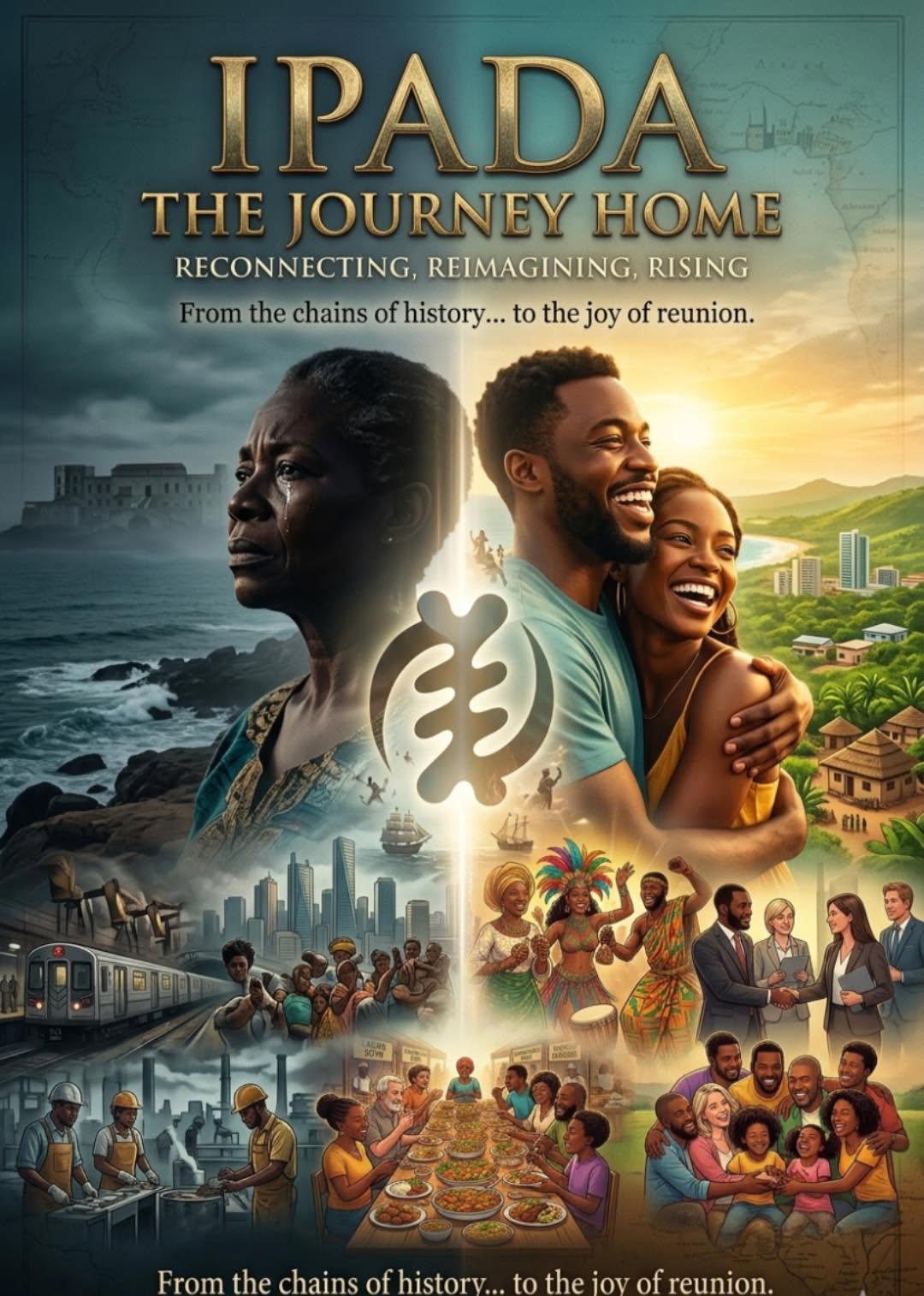
It is not simply about bringing people together for entertainment. It is about bringing people back to their roots.
The idea behind Ipada Celebrations is rooted in the belief that the African diaspora, irrespective of how far and wide its journeys may extend, must never lose its connection to the continent of its origin.
It is a call to return to the motherland. A call to reconnect with one’s ancestry. A call to rediscover an identity that distance, history and generations of separation may have obscured.
The name Ipada is derived from the Yoruba word padà, meaning to return.
What does it mean to return home when generations have been born thousands of kilometres away? What does home mean to someone whose ancestors were taken from Africa centuries ago, or to someone whose grandparents left in search of better opportunities? And how can a continent that has contributed so much to the world invite its descendants to reconnect with it in meaningful ways?
These are the deeper questions that Ipada Celebrations seeks to address.
There is a particular pain in the way Otunba Olawanle Akinboboye speaks about Africa and its diaspora. Beneath his vision for tourism and cultural exchange lies a concern about a continent whose people sometimes look beyond its borders for opportunities while overlooking the immense possibilities within their own homeland.
For him, the tragedy is not that Africans travel abroad, pursue education, build businesses or establish new lives elsewhere. The tragedy is that, in the process, some lose touch with the treasures, history and opportunities that connect them to Africa.
While millions of people of African descent live across Europe, the Americas, the Caribbean and other parts of the world, the continent continues to grapple with questions about how to translate its vast natural and cultural resources into prosperity for its people.
The irony is difficult to ignore. Resources that could support industries, create jobs and transform communities are often extracted and exported, with much of the value added elsewhere. Meanwhile, African countries struggle to develop the infrastructure, institutions and industries needed to maximise their own potential.
For Akinboboye, this is not merely an economic problem. It is also a question of identity, ownership and vision.
Ipada Celebrations is an attempt to confront these questions by changing the way Africa relates to its diaspora.
Rather than treating people of African descent as distant observers of the continent’s affairs, the initiative seeks to create opportunities for them to experience Africa as a living home: a place to visit, invest in, explore, learn from and contribute to.
The return being proposed is therefore not limited to a physical journey. It is also cultural, emotional, intellectual and economic.

The decision to study more than 100 festivals before developing Ipada Celebrations suggests an understanding that a compelling idea must be supported by a practical blueprint.
Around the world, successful festivals have demonstrated that culture can be a powerful economic asset. They attract tourists, support hospitality businesses, create employment and provide platforms for artists, entrepreneurs and local communities.
Rolling Loud has shown how a genre-specific music festival can build a global following. Afro Nation has demonstrated the international appeal of African music and the growing demand for experiences rooted in African sounds and culture.
Other festivals have built their identities around film, food, heritage, art and community traditions.
Ipada Celebrations draws from this broader understanding of festivals as instruments of cultural expression and economic activity. Its ambition, however, extends beyond the conventional festival experience.
The goal is to make the celebration a meeting point for people of African descent and others interested in the continent’s cultural heritage, while creating avenues for tourism, trade, investment and creative collaboration.
The distinction matters.
A festival may attract visitors for a weekend, but a cultural movement seeks to establish relationships that continue long after the music stops. A concert may create memorable moments, but a well-developed tourism and cultural initiative can encourage repeat visits, new business partnerships and sustained engagement with host communities.
For Ipada Celebrations to realise this ambition, the challenge will be to convert its compelling message into experiences and opportunities that visitors can see, feel and participate in.
The success of the initiative will ultimately depend not only on the number of people it attracts, but also on the relationships it builds and the value it creates.
Tourism as a Bridge Between Africa and Its Diaspora
Tourism occupies an important place in the Ipada vision because it provides a practical means of reconnecting people with places they may have encountered only through family histories, books, films and oral traditions.
For members of the African diaspora, a visit to Africa can mean different things. For some, it is an opportunity to explore ancestral connections. For others, it is a chance to discover African art, food, music, architecture and history. Some may come to establish businesses, explore investment opportunities or identify partnerships with local entrepreneurs.
These interests need not be mutually exclusive.
A visitor who arrives for a cultural celebration may discover a business opportunity. Someone who comes to learn about African history may develop a lasting interest in local tourism. An entrepreneur attending a festival may establish relationships that lead to future investments.
This is where the larger economic possibilities emerge.
If properly organised, Ipada Celebrations could help connect cultural tourism with hospitality, transportation, entertainment, agriculture, fashion, the creative industries and other sectors of the economy.
Local businesses could benefit from increased demand for accommodation, food, crafts, transport and visitor experiences. Artists and cultural practitioners could gain access to wider audiences. Communities could find new ways to present their heritage while generating income.
Such outcomes, however, do not happen automatically. They require planning, reliable infrastructure, effective marketing, security, good visitor experiences and deliberate efforts to ensure that local communities benefit from the opportunities created.
The invitation to return home must be accompanied by a compelling reason to come, a welcoming environment and meaningful opportunities to participate.
Reclaiming the African Story
There is another dimension to Ipada Celebrations that deserves attention: the power of storytelling.
For centuries, the African continent has been represented in global conversations through narratives that often emphasise its conflicts, challenges and dependence on external assistance. These realities form part of the continent’s story, but they do not tell the whole story.
Africa is also a continent of extraordinary cultural diversity, ancient civilisations, intellectual traditions, entrepreneurial energy, artistic innovation and youthful ambition.
Its music travels across continents. Its fashion influences global trends. Its writers, filmmakers and visual artists continue to shape international conversations. Its people contribute to science, technology, business, politics and the arts in countries around the world.
Yet, the relationship between Africa and its global diaspora remains one that requires sustained attention, meaningful engagement and practical collaboration.
Ipada Celebrations seeks to create a space where this relationship can be explored beyond nostalgia. The objective is not merely to remember where Africans came from, but to consider what they can build together.
A return to the motherland should not be reduced to photographs, ceremonies and emotional speeches. It should create opportunities for knowledge exchange, cultural preservation, investment, entrepreneurship and lasting relationships between communities.
It should also recognise that Africa is not a single cultural experience. The continent consists of diverse peoples, languages, histories and traditions. Any initiative seeking to reconnect the diaspora with Africa must respect that diversity while identifying the shared experiences and aspirations that can bring people together.
The real opportunity lies in making cultural connection a starting point for deeper engagement.
What Will Make Ipada Celebrations Different?
The ambition to stand alongside established international festivals is significant. But the more important question is whether Ipada Celebrations can establish a distinct identity that gives people compelling reasons to participate.
Its strongest proposition is the combination of cultural reconnection, tourism, trade and the creative arts under a shared vision of return.
Where many festivals focus primarily on entertainment, Ipada Celebrations seeks to make the experience part of a larger conversation about African identity and the continent’s future.
That ambition gives the initiative a potentially wider reach. It can appeal to music lovers, cultural enthusiasts, members of the diaspora, tourists, entrepreneurs and investors, provided its programmes and partnerships deliver on the promise.
It also places a responsibility on the organisers to demonstrate measurable outcomes. Attendance figures and international visibility matter, but so do local employment, business opportunities, repeat tourism, cultural preservation and partnerships that endure beyond the celebration.
The vision will be strengthened by the extent to which it translates into tangible benefits for the communities involved and meaningful experiences for those who answer its call.
The Return Must Become a Movement
Africa does not lack resources, talent or cultural heritage. One of its enduring challenges is building the systems, partnerships and institutions capable of turning these assets into broad-based prosperity.
The African diaspora represents an important part of that equation. Its members possess diverse experiences, professional expertise, cultural connections and economic resources that could contribute to development across the continent. Realising this potential requires more than appeals to ancestry; it requires trust, access, credible opportunities and sustained engagement.
Ipada Celebrations offers a platform through which that conversation can begin.
Its long-term significance will depend on whether the celebration can move beyond the excitement of an event to establish a durable relationship between Africa and its global family.
Rolling Loud has its music. Afro Nation has its celebration of African sounds and culture. Ipada Celebrations has the ambition to turn the idea of returning home into a shared cultural and economic experience.
The comparison is not about declaring one festival superior to another. Each has its own identity, audience and purpose. The distinction is that Ipada is asking a different question: what if a festival could become a bridge between a continent and millions of people around the world who share a connection to it?
For Otunba Olawanle Akinboboye and the team at Motherland Beckons, the answer lies in creating an experience that reminds people of their origins while opening their eyes to the possibilities of the future.
The call is clear: Africa must be more than a place people remember. It must be a place they experience, invest in, build with and return to.