

By Onyekachi Victoria Philip
Behind some of Africa’s most memorable songs are real people, painful experiences, family struggles, heartbreaks and unexpected events that inspired the artists who sang them.While some songs were created purely as entertainment, others came from experiences the musicians had witnessed or lived through themselves.
1. Daddy Lumba — “Theresa” (1990)

Ghanaian highlife legend Daddy Lumba turned a real relationship from his younger years into one of his most recognised love songs when he released “Theresa” in 1990.
The song was not simply a fictional romantic composition created for an album. It was dedicated to Theresa Abebrese, Lumba’s first girlfriend and a woman he has credited with playing an important role in his life before he became famous.
Lumba met Theresa while they were students at Juaben Senior High School in Ghana. At a time when the young musician had little financially, Theresa supported him, including helping with basic needs such as food and clothing.
Her support became even more significant when Lumba decided to travel to Germany in search of greater opportunities.
According to accounts from the musician, Theresa contributed half of the money he needed for the journey.
The trip would eventually change the course of his life.
After arriving in Germany, Lumba continued developing his music career and later formed the Lumba Brothers with Nana Acheampong before embarking on his successful solo career.
In 1990, he released his debut solo album, Obi Ate Meso Buo, and included “Theresa” as a musical tribute to the woman who had been part of his life before the fame.
The song was written, composed and produced by Lumba himself.
For many listeners, “Theresa” was simply a beautiful Ghanaian highlife love song. But behind the melody was the story of a real woman who had supported the singer when his dreams had not yet become reality.
The story became even more emotional years later when Theresa Abebrese died in 2017 at the age of 53. Lumba attended her funeral.
2. Oumou Sangaré — “Saa Magni” (1993)
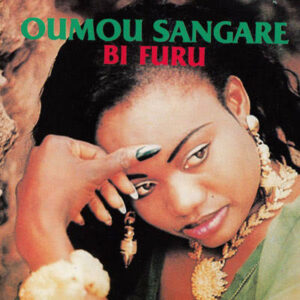
For Malian music star Oumou Sangaré, one of the most painful moments of her early career became the inspiration for a deeply emotional song.
Sangaré lost Ahmadou Ba Guindo, an arranger and co-producer who had played an important role in the development of her early career, when he died in a car accident in 1991.
Guindo was not a distant industry figure.
He had helped assemble musicians around the young singer and was involved in her breakthrough project, Moussoulou, which established Sangaré as one of Mali’s emerging musical stars.
His sudden death therefore represented both a personal and professional loss.
Sangaré responded to the tragedy by writing “Saa Magni” as a tribute to him.
The song appeared on her 1993 album Ko Sira, with sources including World Circuit Records identifying it as a tribute to Guindo and linking the song to his death.
For Sangaré, the song became a way of preserving the memory of someone who had helped shape the beginning of her musical journey.
What listeners heard as a traditional Malian song of mourning carried a much more personal meaning for the singer.
Guindo’s death had become part of her own story, and she turned that grief into music.
3. Salawa Abeni — “Gentle Lady” (1990s)

Nigerian Waka legend Salawa Abeni had already established herself as one of the country’s most successful female traditional-pop performers when an unexpected incident reportedly inspired one of her songs.
According to Nigerian music retrospectives, Abeni composed “Gentle Lady” following a car accident during a school run in the early 1990s.
The incident became an unlikely source of inspiration for the song, which was subsequently associated with her Congratulation Medley.
It was a striking contrast between the event that inspired the composition and the life the song eventually acquired among listeners.
Abeni had begun recording professionally as a teenager and had already built an impressive career within Nigeria’s Waka music scene.
Her ability to turn an everyday experience into music became part of what made her work resonate with audiences.
4. Adane Best — “Ayittey” (1992)

The brother who returned from Nigeria with a warning that became a Ghanaian musical breakthrough.
Ghanaian musician Adane Best entered the Ghanaian mainstream in 1992 with his debut album, Ayittey.
Behind the project was an experience involving someone very close to him,his brother.
Adane Best’s brother had travelled to Nigeria in search of better economic opportunities. Instead of finding the success he had hoped for, he encountered serious difficulties and was eventually deported back to Ghana.
When he returned home, he warned Adane Best against making the same journey to Lagos.
His message was simple, which was success did not necessarily have to be found abroad, and patience could eventually bring opportunities at home.
That experience became the inspiration behind Ayittey, which subsequently became a successful Ghanaian project.
Although the experience happened directly to his brother rather than the singer himself, the event was close enough to home to influence the direction of his music.
5. Boubacar Traoré — “Sécheresse” (1992)
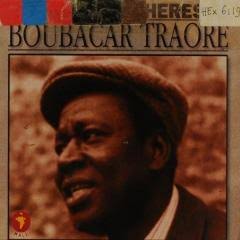
The Malian musician whose years as a migrant worker found their way into his music
Malian blues and folk musician Boubacar Traoré experienced a very different kind of journey before his music career gained international recognition.
After travelling from Mali to Paris, Traoré spent part of his life working as a building labourer.
His experiences as a Malian migrant worker exposed him to the challenges of life away from home and created a period of hardship and reflection.
Those experiences gradually influenced the character of his music.
After his 1990 return to recording with Mariama, Traoré released Sécheresse in 1992.
His later music carried strong themes of homesickness, migration, memory and life between Africa and Europe.
Rather than simply creating songs for commercial entertainment, Traoré drew heavily from the life he had lived.
His music became a musical record of the experiences of an African man who had left home, worked abroad and carried the memories of Mali with him.
6. Oumou Sangaré — “Diaraby Nene” and the personal experiences behind her early music
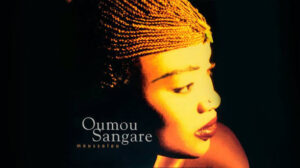
The childhood experiences that shaped Oumou Sangaré’s powerful voice for African women
Long before Oumou Sangaré became an internationally respected Malian singer, she experienced family difficulties that would later influence the subjects she addressed through music.
Sangaré was only two years old when her father took another wife and left the family.
Her mother was left to raise the children and eventually turned to singing at weddings and other events to help provide for them.
The young Sangaré witnessed the difficulties her mother faced and later became involved in helping the family financially.
As a teenager, she sang in the streets and eventually left school as she pursued music.
Those experiences became deeply connected to the subjects she addressed throughout her early career, including marriage, polygamy, women’s rights and the challenges faced by African women.
Her breakthrough album, Moussoulou, meaning “Women,” became a major success, selling more than 200,000 copies in Africa.
Although it would be inaccurate to claim that every individual song was written because of one specific incident in her childhood, Sangaré’s personal history clearly influenced the direction of her music.
Her songs gave voice to experiences she had witnessed from childhood.
7. Thomas Mapfumo — “Jojo” (1990)
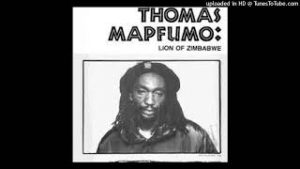
Zimbabwean chimurenga musician Thomas Mapfumo released “Jojo” on his 1990 album Chimurenga Masterpiece.
The song tells the story of a young patriot who becomes caught up in political manipulation and ultimately dies.
Mapfumo’s music was deeply connected to Zimbabwe’s political history, and “Jojo” reflected the violence, intimidation and political manipulation surrounding the country’s political environment.
The story was not created from pure imagination.
Mapfumo had witnessed the consequences of young people becoming involved in political activities, including cases in which young men disappeared.
Through “Jojo,” he turned those observations into a cautionary musical story.
8. Daddy Showkey — “Dyna” (1990s)

The Ajegunle story that helped define Daddy Showkey’s sound
Few musicians captured the energy and storytelling culture of Ajegunle in the 1990s like Daddy Showkey.
His song “Dyna” became one of the records associated with the Galala sound that emerged from the Lagos neighbourhood.
The song tells the story of a woman named Dyna who desperately wants a child, eventually becomes pregnant and celebrates the development.
Rather than relying on complicated lyrics, Showkey used Nigerian Pidgin and straightforward storytelling to create a situation his audience could immediately understand.
The song’s popularity demonstrated the power of everyday Nigerian stories in popular music.
However, there is no reliable evidence establishing Dyna as a specific woman from Showkey’s personal life.
The strength of the record therefore lies in its realistic storytelling rather than a confirmed autobiographical event.
9. Alex Zitto — “Baby Walamkolombo” (1991)
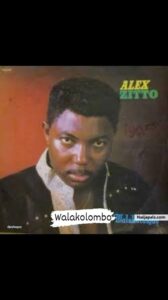
Nigerian reggae musician Alex Zitto became known to a generation of Nigerian listeners through songs including “Baby Walamkolombo,” released in 1991.
The song centred on romantic disappointment and the pain of a relationship that had gone wrong.
Its storytelling made it sound intensely personal, almost as though Zitto was recounting his own heartbreak directly to the audience.
The song became part of the reggae and R&B sound that dominated sections of Nigeria’s music scene during the period.
However, while the song carries the emotional qualities of a real relationship story, there is insufficient reliable evidence to establish that Zitto wrote it because a particular woman had personally broken his heart.
It therefore stands more securely as an example of how Nigerian musicians used believable personal storytelling in their music than as a confirmed autobiographical song.
10. Junior & Pretty — “Bolanle” (1994)
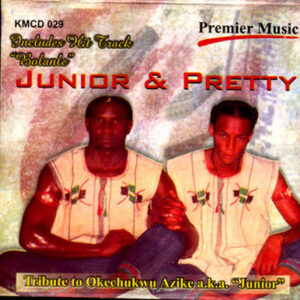
The Nigerian comic-rap hit that turned a woman’s name into a household musical reference
In 1994, Nigerian rap duo Junior & Pretty released “Bolanle,” a humorous and highly memorable record that became part of the sound of Nigerian popular music during the decade.
The song used storytelling and comedy around a woman named Bolanle, combining rap with the duo’s distinctive humorous style.
Released as part of their album Tribute to Okechukwu Azike, the song became one of the records associated with the duo’s career.
Its popularity demonstrated how Nigerian musicians of the era could turn ordinary names, relationships and everyday situations into memorable pop-culture moments.
However, there is no sufficiently reliable evidence to establish that Bolanle was a particular woman from either artist’s personal life.