

By Onyekachi Victoria Philip
The sixth product in Otunba Wanle Akinboboye’s 52 Tourism Products is Yoru’Bar and this is the official launching of the “Yoru’Bar: A Restaurant Like No Other.”
It was released in November 2023 as the sixth product in the weekly 52-product programme, following DNERP, YATE, Kamp Afrika, Corporate African Eco Retreat and Business Bridge.
This sixth product entered another important part of tourism:Food.
But Yoru’Bar was not presented simply as a restaurant where people come, order food and leave.The product was introduced as a complete African culinary and entertainment experience.The central idea behind it was that eating itself could become a tourism attraction.
What Exactly Is Yoru’Bar?
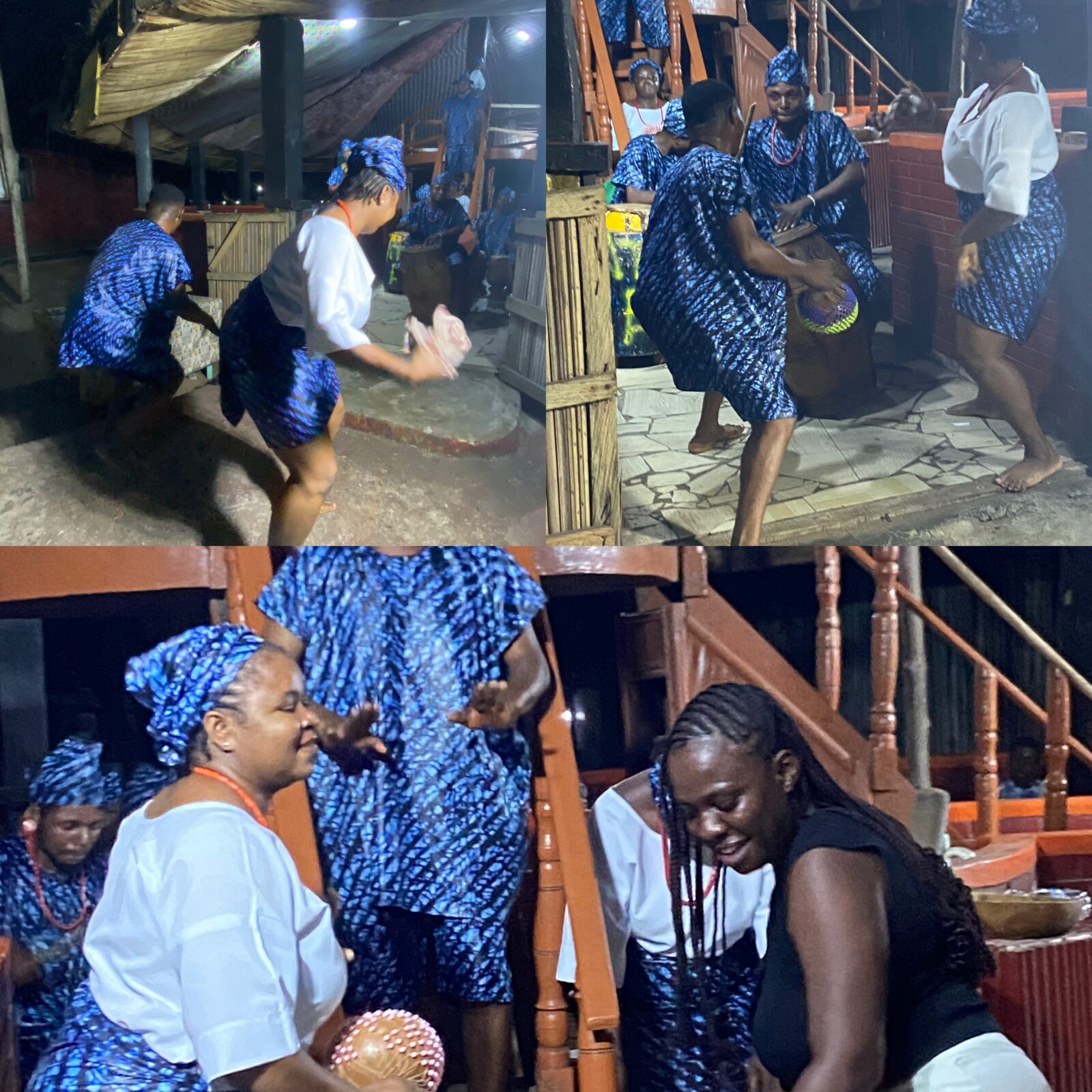
According to the original announcement, Yoru’Bar was designed as a restaurant experience that combines:
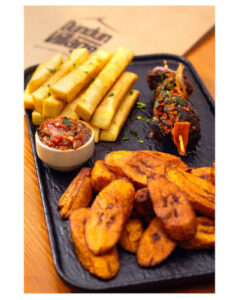
- African cuisine,
- live food preparation,
- traditional eating practices,
- African music,
- dance,
- entertainment,
- participation by guests.
Otunba Wanle Akinboboye said that it was more than a restaurant and said eating there was intended to be more than an ordinary dining experience. The product was specifically presented as a tourism experience designed to engage the five senses.
The Meaning Behind the Name Yoru’Bar
At first sight, the name Yoru’Bar naturally sounds Yoruba.However, Otunba Wanle Akinboboye specifically explained that the concept was not intended to showcase Yoruba food alone.The name was therefore used to reflect the African cultural roots of the experience rather than limit the restaurant strictly to one ethnic cuisine.This is significant because the product follows a pattern already visible in Akinboboye’s tourism philosophy.
He often starts from a Nigerian or Yoruba cultural environment but attempts to expand the experience into a wider African identity.So although the name carries a Yoruba cultural flavour, the stated concept of Yoru’Bar was broader:
African food presented through an immersive cultural experience.
One important finding from the research is that Yoru’Bar did not appear to have been created entirely from scratch in November 2023.Publicly available visitor reviews show that a dining location called YORU’BAR was already operating at La Campagne Tropicana years before the 52-product unveiling.
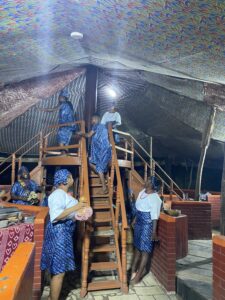
A visitor review from 2019 described being served African meals prepared in their presence while dancing and drumming took place around the experience. This suggests that Yoru’Bar existed as an experiential dining concept before it was formally introduced as the sixth product in the 52 Tourism Products programme.
The 2023 announcement appears to have done something bigger than simply open a new restaurant.It packaged and formally defined the Yoru’Bar experience as a tourism product that could potentially stand on its own and be replicated.
This is consistent with Akinboboye’s wider approach to tourism products: identifying an experience, giving it a clear identity, packaging it and presenting it as something that can be marketed beyond the physical attraction itself.
The Central Idea: Food Preparation Becomes Part of the Entertainment
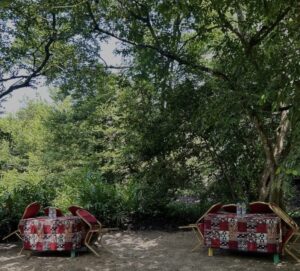
One of the strongest features of the Yoru’Bar concept is the treatment of cooking as a performance.Normally, a restaurant customer sees the finished meal,the cooking happens in the kitchen and the customer orders food.
At Yoru’Bar, according to the original description, the preparation itself was intended to become part of the experience.
Guests could watch processes such as:
- cutting pepper;
- grinding tomatoes;
- cooking yam;
- preparing sauces;
- frying meat;
- boiling fish.
The food preparation was therefore not hidden from the visitor.It was deliberately incorporated into the entertainment. This is one of the most distinctive parts of the product.The customer is not only waiting for food, the customer becomes:
- A spectator to the creation of the food.
- That changes the restaurant experience.
- The kitchen activity becomes part of the attraction.
- The preparation of indigenous food becomes something to watch and remember.
The Five-Senses Concept
The most detailed explanation of Yoru’Bar during its 2023 unveiling was built around the five senses.
The restaurant experience was designed to involve:
- Touch
- Sight
- Smell
- Taste
- Hearing
It was central to how Yoru’Bar was presented.
1. Touch
According to the original product description, guests would enter the restaurant barefooted.
They would also be required to wash their hands and eat with their hands.
The seating areas were described as having hand-washing bowls for guests.
The concept was linked to traditional African eating practices.
This part of the experience was intended to activate the sense of touch.
Instead of maintaining complete separation between the diner and the food through:
- forks;
- knives;
- spoons;
the guest physically interacts with the meal.
The bare feet were also intended to contribute to the sensory experience.
Whether every individual visitor prefers this style of dining would naturally depend on personal preference, but it was clearly part of the original concept’s attempt to move away from conventional restaurant behaviour.
2. Sight
Sight was addressed through the live preparation of food.
Guests could watch the ingredients move through different stages before becoming a finished meal.
The visual experience therefore becomes part of the tourism product.This is particularly important for traditional African cuisine because many indigenous cooking processes involve visually distinctive methods, ingredients and utensils.
The act of preparing the meal becomes a form of cultural display.
3. Smell
Food preparation naturally creates aromas.
The original concept specifically linked the cooking environment to the sensory experience of Yoru’Bar.
As pepper is cut, meat is fried, sauces are prepared and fish is cooked, the smell becomes part of the atmosphere.
Unlike a conventional restaurant where the kitchen may be physically separated from the customer, Yoru’Bar’s live cooking concept allows the preparation itself to contribute to the guest’s environment.
The smell of the food therefore becomes part of the journey before the first bite.
4. Taste
Taste is the most obvious part of a restaurant experience.However, Yoru’Bar attempted to present African food as something beyond ordinary consumption.
The food itself was positioned as part of a larger showcase of African culinary heritage.
The original announcement stated that Yoru’Bar was intended to showcase Africa’s unique cuisine, rather than simply operate as a restaurant serving a limited menu. This is important in tourism.
Food often becomes one of the strongest memories visitors carry away from a destination.
A tourist may forget:
- the hotel room;
- the transport;
- the exact route;
but remember a particular meal.
Yoru’Bar attempts to turn that possibility into a deliberate tourism strategy.
5. Hearing
The sense of hearing was intended to be engaged through:
- African music;
- cultural performances;
- dance;
- sounds connected with the preparation of food.
The original unveiling specifically mentioned carefully crafted African music and dance as part of the cooking and eating process.
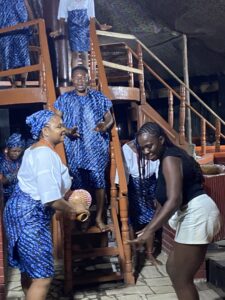
Earlier visitor accounts also described Yoru’Bar meals being accompanied by dancing and drumming.
This means the meal was not designed to take place in silence.
Sound was part of the environment.The customer eats while being surrounded by African cultural expression.
Why the Barefoot and Hand-Eating Experience Matters
One of the most unusual aspects of Yoru’Bar is the decision to require guests to remove their footwear and eat with their hands.This was presented as an attempt to align the experience with traditional cultural practices.However, the deeper tourism logic is about participation.
A tourist experience becomes more memorable when the visitor does something rather than simply watches.
There is a difference between watching African culture and participating in an African cultural practice.
At Yoru’Bar, the visitor is expected to become part of the experience.The visitor does not merely observe African dining culture from a distance.
The visitor:
- removes footwear,
- washes hands,
- watches food being prepared,
- listens to music,
- eats using their hands.
The customer therefore moves from being only a consumer to becoming a participant .That is one of the clearest ways Yoru’Bar fits into the idea of experiential tourism.
Yoru’Bar and Culinary Tourism
Culinary tourism involves travelling partly to experience:
- local food;
- cooking traditions;
- food markets;
- restaurants;
- traditional ingredients;
- food preparation methods.
Food has become an important part of destination marketing worldwide.Countries and cities increasingly use dishes to attract visitors.
Examples include destinations becoming associated with particular foods such as:
- Italian pizza;
- Japanese sushi;
- Indian curry;
- Thai street food;
- Moroccan cuisine.
Yoru’Bar treats cuisine as a tourism asset.
African Food as an Economic Tourism Product
Africa has a wide range of indigenous dishes.
Yet many African tourism experiences historically placed more marketing emphasis on:
- beaches;
- wildlife;
- safaris;
- monuments;
- cultural festivals.
Yoru’Bar places food at the centre.
This suggests that African cuisine can generate tourism activity around:
- restaurants;
- chefs;
- food suppliers;
- farmers;
- fishermen;
- spice producers;
- cultural performers;
- food storytellers.
The original announcement described Yoru’Bar as a complete entertainment experience rather than a conventional restaurant service which is a significant difference.
A conventional restaurant primarily sells:
Food and service.
Yoru’Bar attempts to sell:
The Tourism Experience Begins Before the Food Is Served
One of the strongest ideas in the product is that the experience begins before eating.
At a normal restaurant:
Experience begins when food arrives.
At Yoru’Bar:
Experience begins with arrival.