

By Onyekachi Victoria Philip
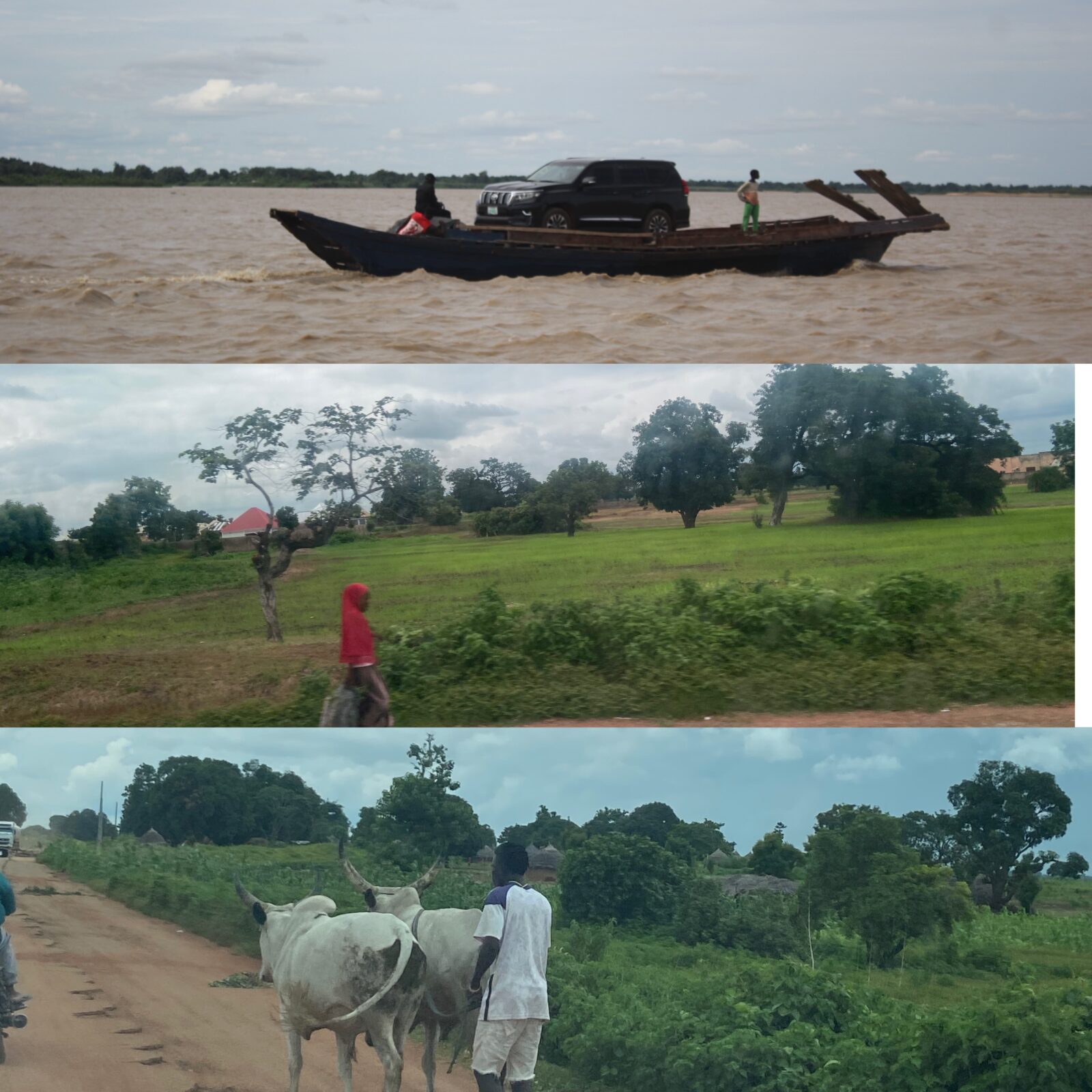
For many decades, engine-powered canoes have pulled cars, buses and trucks across the River Benue through Ibi, Taraba State, but only a few travellers know the remarkable story and business system behind the unusual journey.
For first-time visitors, the sight of a canoe carrying a heavily weighted vehicle across the deep waters of the River Benue can appear almost impossible. The question naturally comes to mind: how can a seemingly small canoe carry a car or even a truck with passengers across such a vast river?
But at Ibi, what looks impossible has become a carefully developed form of transportation and a thriving source of livelihood.
For travellers from Abuja and Nasarawa seeking access to parts of Taraba State, the journey takes an unusual turn when the road leads to the riverbank. Instead of continuing on a bridge, vehicles are driven onto engine-powered canoes specially used to ferry them across the Benue.
At the riverbank, a crowd of hardworking canoe operators surrounds the crossing point. They negotiate with motorists, assist passengers and prepare vehicles for the journey while the sound of engines, voices and moving water fills the atmosphere.The process is striking indeed .
Operators carefully position vehicles on the canoes while other men help secure and balance them. Passengers remain inside or around the vehicles as the canoe begins its slow movement into the river.
Children can also be seen assisting around the waterfront, while some swim through the waters as the ferrying operation continues.
For someone seeing the process for the first time, the experience can be both fascinating and frightening.But behind the seemingly risky journey is a level of local knowledge that has been developed over the years.
A conversation with some of the canoe operators revealed that the ferry operation involves more than simply placing a vehicle on a wooden canoe and starting an engine.
One of the operators explained that safety measures are considered before a vehicle enters the river. According to him, life jackets and other safety equipment are available to assist passengers during emergencies.
He also explained that the canoes used for commercial ferrying are constructed by experienced local craftsmen and tested on the river before being used to transport vehicles and passengers.
The operators further disclosed that their earnings depend on the number of vehicles they ferry each day, with some making between N40,000 and N100,000 daily. A vehicle may pay around N15,000 for a crossing, depending on the circumstances and type of vehicle.
As the canoe approaches the opposite bank, the operation becomes even more intense.
Workers waiting on land rush towards the arriving ferry, helping to pull the vehicle safely from the river onto solid ground. The moment the vehicle leaves the canoe, the business ecosystem around the landing point immediately becomes visible.
Traders line the waterfront, waiting for passengers who may need food, drinks and other items after the river journey.
Some traders described the movement across the river as beneficial to their businesses, saying the constant flow of travellers provides them with a steady market.
For many of these residents, the River Benue is therefore more than a body of water. It is a workplace, a marketplace and a source of livelihood.
The ferry operators may not have formal education or sophisticated equipment, but their knowledge of the river, their ability to handle the canoes and their understanding of the business have created an important commercial system around the crossing.
What appears to an outsider as an extraordinary and risky journey is, to the people of Ibi, part of everyday life.
At Ibi, when a car enters the River Benue, it is not simply taking a boat ride.
It is entering a decades-old story of survival, skill and commerce.