

By Onyekachi Victoria Philip
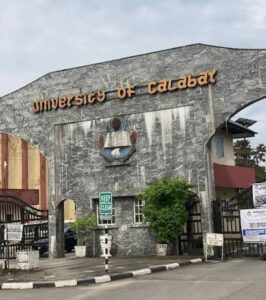
The University of Calabar has one of the more established academic tourism structures among the three universities examined.
Its Department of Tourism Studies/Hospitality and Tourism Management has developed expertise across tourism development, hospitality, ecotourism, heritage and destination management.
Its postgraduate structure has historically included programmes in:
Ecotourism, Conservation and Rural Studies
Heritage Management
Events and Hospitality Management
Travel and Tour Operations
Tourism Development
Tourism and Recreation Planning.
The programme structure also includes field tours and practical research, showing an emphasis on connecting academic knowledge with tourism destinations.
University of Calabar’s tourism academics remain active in contemporary tourism research.
In June 2026, researchers affiliated with the university’s Department of Tourism Studies published research examining how digital transformation affects customer satisfaction, revisit intentions and customer loyalty in Calabar’s hotel sector.
Another 2026 study examined digital innovation in hotels and its effect on service delivery, customer satisfaction and loyalty, reflecting the growing importance of technology in modern tourism and hospitality.
Research from the university has also examined ecotourism income, institutional support and environmental awareness in Cross River State, demonstrating that the institution’s tourism research extends beyond hotels into sustainable tourism and host communities.

In 2025, a University of Calabar professor, Bassey Esu, also called for Hospitality Studies to be introduced as a separate subject in Nigerian secondary schools and advocated for greater academic attention to hospitality education.
The location itself gives the university an unusual advantage.Cross River State has long been associated with tourism, festivals, hospitality, conservation and nature-based attractions.
Consequently, students and researchers at the University of Calabar operate within an environment where tourism is not simply a classroom subject but a major part of the region’s economic and cultural identity.
Research from the university has examined the impact of mass tourism on hospitality and destination development in Cross River State, further demonstrating the institution’s engagement with real tourism challenges.
University of Calabar’s tourism research areas have perhaps the clearest conceptual overlap with Akinboboye’s tourism philosophy, particularly in:
Ecotourism
Heritage tourism
Tourism development
Destination planning
Hospitality
Community tourism
Conservation
Events
Travel and tour operations
His La Campagne Tropicana concept combines nature, African culture, hospitality, entertainment and economic opportunities for host communities.
His broader tourism agenda also seeks to turn Nigeria and Africa’s natural and cultural assets into tourism products.
Recall that The Guardian reported that he has promoted numerous tourism products as part of his Destination Nigeria vision.