
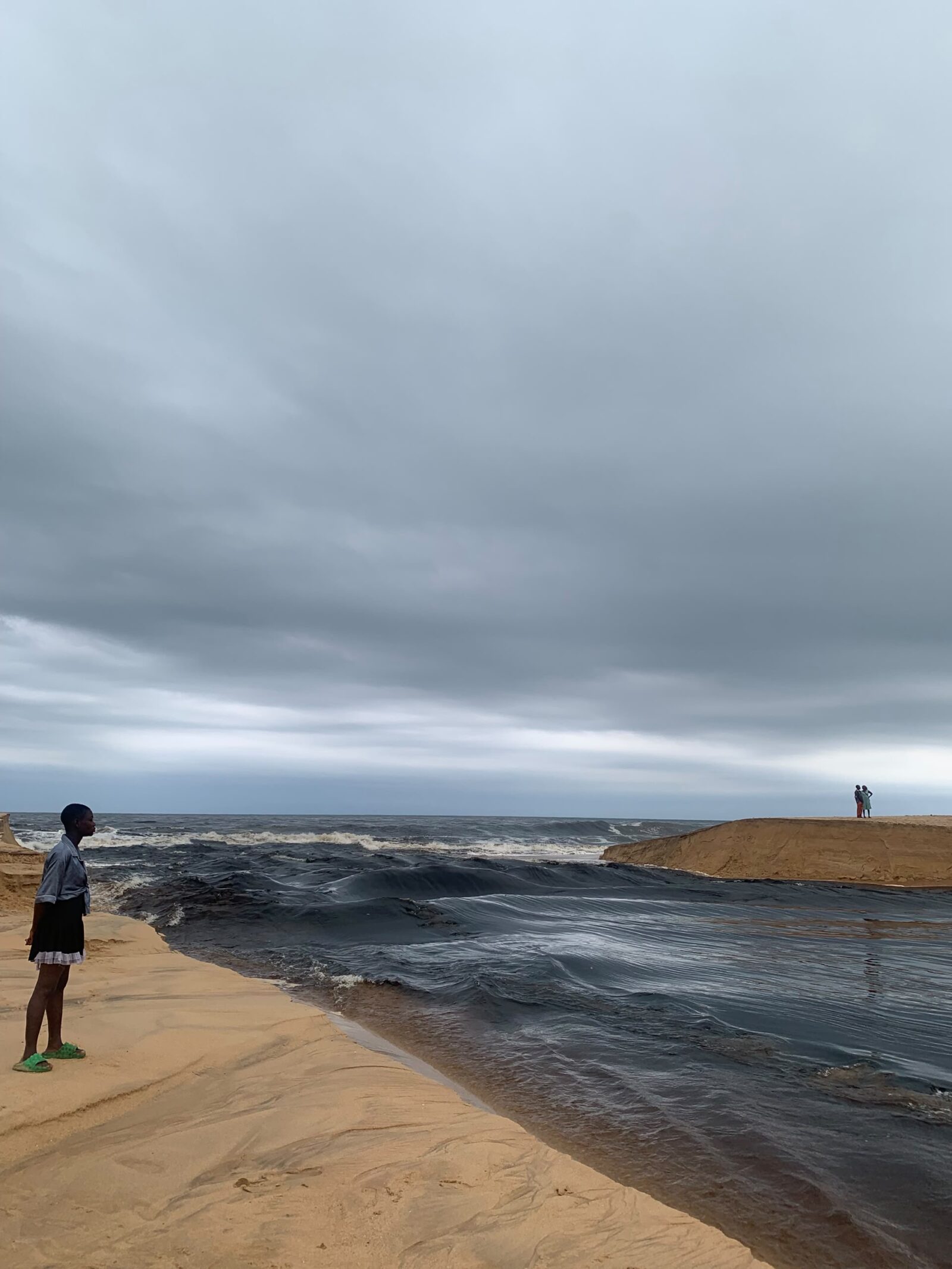

Visitors and tourists at La Campagne Tropicana Beach Resort witnessed a powerful view after heavy rainfall caused the lagoon, locally known by many as the “Oso River,” to overflow through the sandy channel and merge with the Atlantic Ocean.
The unusual sight created a stunning landscape where the calm, dark lagoon waters met the powerful waves of the Atlantic, forming a temporary connection between two distinct water bodies.
Onlookers described the event as magic of nature as the overflowing lagoon carved a visible path across the beach and emptied into the ocean.
Why Does This Happen?
The phenomenon occurs when persistent rainfall significantly raises the water level of the lagoon.
As more freshwater flows into the lagoon from surrounding creeks, rivers, and drainage channels, the water level rises beyond its normal capacity.
Once the pressure becomes strong enough, the excess water seeks an outlet and breaks through the sand barrier separating the lagoon from the Atlantic Ocean.
This natural process is common in many coastal ecosystems around the world, particularly during periods of intense rainfall, flooding, or seasonal water surges.
Where the Lagoon Meets the Ocean
The meeting point between the lagoon and the Atlantic Ocean is known as an estuarine connection or tidal inlet.
At this point, freshwater from the lagoon mixes with saltwater from the ocean, creating a unique environment rich in nutrients and aquatic life.
When the waters merge, guests can often notice differences in color, temperature, and movement.
The lagoon water is typically calmer and less salty, while the Atlantic Ocean carries stronger waves and higher salt content.
As they meet, the waters gradually blend together, creating swirling patterns that can be seen from a distance.
Such connections are important for maintaining the ecological balance of coastal areas.
The exchange of water helps regulate water levels, transport nutrients, and support fish, crabs, birds, and other wildlife that thrive in brackish environments where fresh and saltwater mix.