

By Onyekachi Victoria Philip
At La Campagne Tropicana Beach Resort, Ikegun, Ibeju-Lekki, Lagos, the idea of experiencing Africa does not end with the beach, forest, lagoon or traditional architecture. Tucked into the resort’s growing collection of tourism products is an ambitious concept designed to take visitors beyond Nigeria and into the wider cultural and commercial identity of the African continent.
That concept is Oja Africa-the African Market.
Conceived by tourism entrepreneur and founder of La Campagne Tropicana, Otunba Wanle Akinboboye, Oja Africa was created as a Pan-African marketplace where the African continent diverse cultures, arts, crafts, food, fashion, music and traditions can converge in one destination.
The concept attempts to turn the familiar idea of an African market into a tourism experience, one where a visitor can encounter the cultural identity and products of different African countries without physically travelling from one country to another.
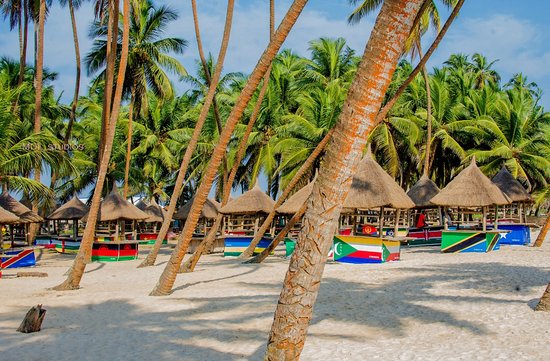
The first Oja Africa was established at La Campagne Tropicana and was described by Akinboboye as having 54 stores representing the 54 African countries. The idea was to create a central destination where visitors could move through the identities of African nations while shopping, eating, listening to music and encountering their cultural expressions.
The five principal elements around which the concept is built are African culture, arts and crafts, customs, food and music.
This makes Oja Africa different from an ordinary shopping mall. Its central attraction is not simply the buying and selling of goods, but the opportunity to encounter the stories, traditions and creative expressions behind those goods.
The vision is to create a place where Africa can essentially tell its own story through the things Africans make, wear, eat, perform and preserve.
The thinking behind Oja Africa is closely connected to the idea of greater intra-African trade and cultural interaction.
According to Otunba Wanle Akinboboye, the project was designed to complement the spirit of the African Continental Free Trade Area, by creating a physical marketplace where goods from across the continent can meet consumers in one location.
Rather than requiring visitors to obtain visas, purchase multiple air tickets and undertake lengthy journeys across the continent simply to discover African products, the concept brings those experiences together at a single destination.
A visitor arriving at La Campagne Tropicana can therefore encounter an African marketplace that is intended to take them conceptually from Nigeria to Ghana, Burkina Faso, Egypt, South Africa and other parts of the continent.
It is built around the belief that Africa’s diversity itself can become a marketable experience.
At the heart of Oja Africa is the opportunity to purchase and experience products associated with African creativity.
The concept encompasses jewellery, crafts, fashion, food, drinks, artworks and other cultural products, while music and cultural performances add another layer to the experience.
The marketplace therefore has the potential to serve several categories of visitors at once.
For tourists, it provides a cultural shopping experience.
For Africans in the diaspora, it offers an avenue to reconnect with the continent through tangible expressions of African identity.
For local creatives and artisans, it provides a potential platform for displaying and commercialising their work.
And for international visitors, it offers a concentrated introduction to the diversity of African products and traditions.
The importance attached to culture is evident in the way Oja Africa has been presented at La Campagne Tropicana.
During a visit to the resort in April 2024, the then Minister of Tourism, Lola Ade-John, was taken around the facility by Akinboboye. Oja Africa was among the attractions she visited, and it was described as a marketplace where African nations have stands to showcase and sell their artefacts, arts and culture.
That visit placed the marketplace within the larger cultural-tourism story of La Campagne Tropicana.
The resort itself is built around African hospitality and culture, combining the Atlantic coastline, lagoon, mangrove forest, traditional architecture, nature and hospitality into a single tourism environment.
Oja Africa extends that philosophy from the physical environment into commerce.
A concept that predates its 2024 publicity
Although Oja Africa received significant publicity as one of Akinboboye’s tourism products in 2024, records show that the concept had already appeared at La Campagne Tropicana years earlier.
Following the Africa International Music Festival held at the resort in December 2021, the African Market was launched as a new part of the resort. Contemporary coverage described it as a marketplace where different African countries would have stands to sell artefacts peculiar to their respective cultures.
That early launch is important because it shows that Oja Africa was not merely a later marketing idea attached to the resort. It formed part of a continuing effort to make La Campagne Tropicana a place where African countries could be experienced through culture, entertainment and commerce.
The idea later evolved into a broader vision of an African shopping mall.
This philosophy also aligns with the wider direction of IPADA, the initiative associated with Akinboboye and La Campagne Tropicana, which seeks to encourage Africans in the diaspora to reconnect with the continent and to position Africa as a unified tourism destination. In describing the vision, Akinboboye has spoken of creating an African shopping mall where visitors can encounter the continent’s 54 countries.
One of the strongest aspects of the Oja Africa concept is its attempt to connect cultural preservation with economic activity.
African culture is often presented through festivals, museums, performances and historical sites. Oja Africa adds another dimension, commerce.
A piece of African jewellery can become a souvenir and a business opportunity. A traditional food can become a tourism attraction. A textile can carry both cultural meaning and commercial value. A musical performance can entertain visitors while introducing them to a country’s artistic heritage.
In that sense, Oja Africa treats culture not merely as something to be observed but as something that can be experienced, exchanged and economically valued.
La Campagne Tropicana already positions itself as an African-themed Forest, River and Beach Resort, with its natural landscape incorporating the Atlantic Ocean, lagoon, mangrove forest, indigenous flora and fauna, African hospitality and traditional-inspired accommodation.
Oja Africa adds a distinctly commercial and continental dimension to that experience.
A visitor can spend part of the day experiencing the beach and lagoon, explore the resort’s cultural attractions and then enter an environment designed around African commerce and creativity.
That combination creates something larger than a conventional resort marketplace.
The significance of Oja Africa may ultimately lie in its ability to connect three groups: tourists, African producers and the diaspora.
That makes the project relevant not only to leisure tourism but also to cultural diplomacy, creative industries and intra-African commerce.
Oja Africa is one part of the broader collection of tourism concepts associated with Akinboboye’s efforts to continually reinvent La Campagne Tropicana.
An analysis of his tourism products listed Oja Africa alongside initiatives such as IPADA, Motherland Beckons, Yoru’Bar, African Beach Safari, Atunda Entertainment, Kamp Afrika, Corporate African Eco Retreat and the Nefertiti project, among others.
Together, the concepts point towards a model of tourism that goes beyond accommodation and sightseeing.
The visitor is expected to eat Africa, hear Africa, see Africa, shop Africa, celebrate Africa and ultimately experience Africa.
That is where Oja Africa becomes particularly significant.
It is not simply about putting 54 stalls in one location. It is an attempt to make the diversity of an entire continent part of one tourism experience.
At a time when African tourism destinations are increasingly competing for international visitors, Oja Africa presents a different proposition.
Instead of asking the world to visit Africa one country at a time, it presents Africa as a collective experience.
From arts and crafts to food, fashion, music and cultural products, the marketplace seeks to demonstrate that the continent possesses an enormous creative and cultural economy capable of attracting visitors while giving African products a platform.
And at La Campagne Tropicana, that proposition is surrounded by the Atlantic coastline, forest, lagoon and the resort’s broader African hospitality experience.
Oja Africa is a tourism idea built to experience Africa, sometimes the journey does not have to begin with a plane ticket that can begin at one marketplace in Lagos.