
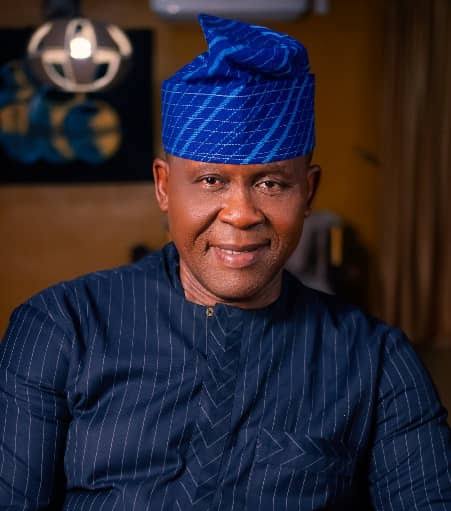

By Onyekachi Victoria Philip
The Diaspora Nigeria Economic Recovery Programme (DNERP) occupies a special position in Otunba Wanle Akinboboye’s tourism-development philosophy.
It was not just simply the first item in his later 52 Tourism Products series announced in 2023, the idea behind DNERP can be traced several years earlier to his work through Motherland Beckons, where he sought to turn Nigerians and people of African descent in the diaspora from spectators of Nigeria’s development into participants in it.
What makes DNERP particularly important is that it sits at the intersection of tourism, diaspora engagement, investment, hospitality, entertainment, philanthropy and economic development. Its central proposition is relatively straightforward: instead of seeing tourism only as people visiting attractions, Nigeria can use travel and hospitality to bring diaspora capital, skills, spending and relationships into the country.
1. What exactly is DNERP?
DNERP stands for Diaspora Nigeria Economic Recovery Programme.
In the 2023 version presented by Akinboboye as the first of his 52 tourism products, the programme was described as an extensive initiative that went beyond conventional tourism. It was designed around the idea that Nigerians in the diaspora, lovers of Nigeria and their friends could contribute to economic recovery by visiting Nigeria, spending within the local economy and investing in Nigerian businesses.
Akinboboye divided the concept into two broad components:
- Leisure
- Business
The leisure component was intended to bring diaspora Nigerians and their friends into Nigeria for an organised tourism and entertainment experience. The business component was intended to connect diaspora Nigerians interested in doing business in Nigeria with opportunities to invest in local companies and enterprises.
This distinction is important because it shows that DNERP was conceived as more than a holiday package. Tourism was being used as the entry point for economic participation.
2. The idea actually predates the 2023 “first product”
One of the most important findings from the research is that DNERP did not begin in 2023.
There was an earlier version known as the Diaspora Nigeria Economic Recovery and Growth Plan (DNERGP).
On May 1, 2017, Motherland Beckons launched DNERGP at La Campagne Tropicana Beach Resort in Lagos. The initiative was described at the time as a tourism and creative-arts initiative aimed at reviving the Nigerian economy and putting it on a sustainable-growth path.
The programme was jointly unveiled by Otunba Wanle Akinboboye, then President of Motherland Beckons, and Dr. Ferdinand Anikwe, then Director-General of the Centre for Black and African Arts and Civilisation (CBAAC).
The 2017 plan already contained a strikingly similar philosophy to the DNERP that later appeared as Product No. 1 in the 52-product programme.
The leisure component proposed a package in which Nigerians in the diaspora and their friends could invest 1,000 dollars per person for a three-day, two-night Nigerian entertainment experience involving African music, dance, drama, poetry, cuisine and nightlife.
So, 2023 was not the birth of the DNERP concept. Rather, 2023 represented the moment Akinboboye reintroduced and repositioned DNERP as the first product in his new 52-product tourism challenge.
That distinction should be retained in any serious report on the programme.
3. Why was the diaspora so important?
The philosophy behind DNERP is rooted in a major economic reality: the Nigerian diaspora represents a large pool of money, skills, relationships and international access.
Akinboboye’s argument was that Nigeria should not approach the diaspora merely as people who send money home or return occasionally for Christmas and family events. They could also become tourists, investors, business partners, cultural ambassadors and destination promoters.
This philosophy was also evident in the broader Motherland Beckons movement.
In 2019, Akinboboye described Motherland Beckons as a platform through which Africans in the diaspora could contribute to the growth and development of Africa rather than merely coming home to enjoy themselves.
That makes DNERP part of a much larger idea:
Reconnect the diaspora with the continent and convert that connection into economic and developmental activity.
4. DNERP in practice: the 2018/2019 activation
The most significant evidence that DNERP was more than a theoretical proposal came before its 2023 relaunch.
During the 2018 Yuletide period, Motherland Beckons used DNERP in an initiative involving more than 1,000 Nigerian children and youths.
A Nigerian-American named Bolaji Adeeko, based in Atlanta, participated by providing food and support for the children during the festive period.
Akinboboye described the initiative as a significant development for the DNERP movement because Adeeko had responded to the idea of diaspora Nigerians contributing directly to Nigeria’s development.
Akinboboye presented the initiative as a model that could be multiplied…if many Nigerians abroad each returned home with a developmental project or contribution, the cumulative impact could become enormous.
Adeeko was also expected to return with additional people and expand the initiative, with an ambition of reaching 5,000 children and youths in a subsequent year.
This gives DNERP a practical history of diaspora participation producing direct local benefits, rather than being merely a slogan about attracting tourists.
5. The economic theory behind DNERP
The logic is essentially a tourism multiplier effect.
A visitor does not spend money only on a hotel.
A visitor can pay for:
Flight – airport transport – accommodation – food -entertainment – tour guide- attraction fees -shopping -souvenirs – taxis – local services -cultural experiences.
Each transaction potentially creates income for another person or business.
That is why Akinboboye described tourism as a particularly accessible economic sector. His argument was that money entering through tourism can quickly reach ordinary participants such as taxi drivers, tour guides, souvenir sellers, hotels and other service providers.
DNERP therefore treats the tourist as an economic participant, not simply a visitor.
6. The 2023 revival: why DNERP became Product No. 1
In 2023, Akinboboye announced an ambitious plan to unveil 52 tourism products over 52 weeks.
The concept emerged from his criticism of the way tourism was being approached in Nigeria.
His position was that Nigeria had many attractions but had not done enough to turn those attractions into properly packaged, marketable tourism products.
He explained the difference between an attraction and a tourism product: an attraction becomes commercially useful when it is surrounded by activities, infrastructure and experiences that encourage visitors to stay, participate and spend.
DNERP was therefore chosen as the first product because it addressed something beyond a single destination.
It addressed the market itself — particularly the Nigerian and African diaspora.
7. The 52-product strategy
The DNERP announcement was the beginning of a much wider experiment.
Akinboboye said the first year would involve creating 52 products, after which the products would be polished and standardised over the following two years while another set of products could be developed. He also proposed that the products could eventually be recreated across Nigeria’s 774 local government areas and the Federal Capital Territory.
By early 2024, reports had documented at least 22 products released from the larger programme.
They included DNERP, YATE, Kamp Afrika, Corporate African Eco Retreat, Business Bridge, Yoru’Bar, Beach Safari, Scuba Diving, HURP, Motherland Beckons, IPADA, IPADA Carnival, AIM Festival, Ose Awards, Oja Africa, Nefertiti, traditional-architecture tourism, Atunda Entertainment, Mudhouse, security tour guides, Tourism Half Hour and the World Longest Pool.
This reveals something important about DNERP: it was not designed to operate alone.
It was the first piece of an ecosystem.
8. DNERP’s relationship with the other products
Several products that followed DNERP strengthened the same diaspora-development philosophy.
YATE
The Youth African Tourism Expedition became Product No. 2 and focused on exposing young people to African tourism, recreation and culture.
Business Bridge
Another product sought to connect diaspora investors with Nigerian SMEs.
One example involved diaspora investment in young fishermen, with a proposed management and monitoring structure intended to allow investors abroad to monitor businesses in Nigeria remotely.
HURP
Hope, Unity, Rebirth and Prosperity was also identified as part of the products directed toward creating a relationship between Nigeria/Africa and its diaspora.
Motherland Beckons
This became one of the major philosophical umbrellas for the broader idea of bringing Africans and the diaspora closer to the continent.
IPADA
IPADA subsequently developed the idea of returning to and reconnecting with Africa through tourism, culture, trade and investment.
This means that DNERP can be understood as one of the economic foundations of a much broader Pan-African tourism strategy.
9. The bigger vision: Nigeria as the gateway to Africa
Akinboboye’s vision was not restricted to attracting Nigerians abroad.
He argued that Nigeria, particularly Lagos, could become a gateway through which people of African descent and lovers of Africa access the wider continent.
Reports on the 52-product programme quoted his ambition of attracting as many as 50 million people annually to Africa through Nigeria in the long term.
He linked this ambition to Nigeria’s geographic, economic and infrastructure advantages, including the development around the Lekki Deep Sea Port.
His broader symbolism was also striking: transforming the historical movement associated with slave ships into a new movement represented by cruise ships and modern luxury travel.
The underlying message is one of historical reversal:
Africa once lost people through forced migration; now Africa should create reasons for the global African family to return voluntarily, travel, invest and reconnect.
10. Why DNERP is different from ordinary diaspora tourism
Ordinary diaspora tourism might involve:
- visiting family;
- attending weddings;
- visiting ancestral towns;
- going on holiday;
- attending festivals.
DNERP attempts to add another layer:
Return -spend -experience -invest -contribute.
That makes it closer to a hybrid of:
diaspora tourism + cultural tourism + investment promotion + hospitality + community development.
This is arguably its strongest conceptual feature.
A diaspora visitor who spends money in a hotel is already contributing economically.
A diaspora visitor who additionally invests in a local business, sponsors a community project or brings other visitors creates a deeper economic relationship.
11. DNERP and the African diaspora market
The importance of the diaspora strategy became even clearer when analysts examined the 52 products in 2024.
Africa Travel Herald identified DNERP, YATE, Business Bridge, HURP, Motherland Beckons, IPADA, IPADA Carnival and AIM Festival as products specifically positioned to establish contact with African diaspora source markets, particularly in the Americas and Caribbean.
This is significant because successful destinations do not simply ask:
“What attractions do we have?”
They also ask:
“Who is our market, what motivates them to travel, and what product will make them spend money here?”
DNERP was designed around that second question.
12. What happened to DNERP after its launch?
This is where the research needs to be careful.
There is substantial evidence of DNERP activities before and around its 2023 relaunch, but I did not find a recent 2025–2026 public announcement announcing DNERP as a standalone programme with new targets, figures or a new operational structure.
That does not establish that DNERP has ended.
It means that, based on publicly indexed material I could verify, the programme’s name has become less prominent than the wider initiatives that embody its philosophy.
The evolution is visible.
The earlier DNERP concept fed into the broader Motherland Beckons philosophy. The 2023 52-product programme then placed DNERP at No. 1, while subsequent products expanded the strategy into youth tourism, diaspora investment, cultural tourism, festivals and destination development.
As of August 2026, the most visible continuation of the philosophy is no longer a standalone DNERP campaign but the broader network around Motherland Beckons, IPADA and Akinboboye’s expanding tourism and Pan-African development activities.
A recent August 2026 report on Akinboboye’s tourism vision describes Motherland Beckons and IPADA as platforms for connecting Africans and the diaspora through tourism, investment, cultural exchange and destination development. It also points to ongoing resort-development ambitions across Nigeria and Africa.
That is important when assessing DNERP today.
The idea has effectively moved from:
“Bring the diaspora home and let them spend/invest”
toward a broader model:
“Build African destinations, connect them to the diaspora, create tourism experiences, facilitate investment and use tourism as a continental development tool.”
The recent establishment and promotion of initiatives such as the Africa Turkey Trade Centre also show the wider movement extending beyond tourism into trade, investment, culture and diaspora engagement.
14. What makes DNERP historically important?
DNERP is significant because it was an early attempt to answer one of Nigeria’s biggest tourism questions:
How do you turn the Nigerian diaspora from an audience into an economic partner?
Its answer was to use tourism as the bridge.
The programme connected several economic activities that are normally treated separately:
Tourism – hospitality – entertainment – local businesses – investment – diaspora engagement – community development.
That is why calling DNERP merely a tour package would undersell the concept.
It was conceived as an economic-development framework delivered partly through tourism.
15. The major strengths of the concept
1. It identifies a ready-made international market
The Nigerian and wider African diaspora already have emotional, cultural and historical connections to Africa.
2. It encourages inbound spending
Instead of Nigerians travelling abroad and spending money there, the programme seeks to make Nigeria attractive enough to receive more international visitors.
3. It connects tourism with SMEs
Tourism creates demand for transportation, food, accommodation, entertainment, retail, guiding, crafts and other services.
4. It combines leisure with investment
This is one of DNERP’s most distinctive features.
5. It gives diaspora engagement a practical dimension
The message is not simply “come home.” It is essentially “come home, experience, participate and contribute.”
6. It provides a foundation for other tourism products
DNERP’s philosophy is visible in later products such as Business Bridge, IPADA and Motherland Beckons.
16. The challenges
An educative report should also examine the limitations.
The biggest challenge is execution at scale.
Attracting millions of tourists requires more than good concepts. It requires:
- reliable transportation;
- aviation connectivity;
- security;
- destination infrastructure;
- internationally competitive hospitality;
- clear visa processes;
- strong destination marketing;
- payment systems;
- investor protection;
- reliable tourism statistics;
- consistent government policy.
There is also the question of measuring results.
A programme such as DNERP needs clear indicators such as:
number of diaspora visitors – money spent – businesses supported- jobs created – investments generated -communities reached – repeat visitors.
Without those measurements, it becomes difficult to determine the programme’s actual economic impact.
This is particularly relevant because analysts examining Akinboboye’s 52 products in 2024 argued that Nigeria needed stronger strategic planning around tourism products and its source markets.
17. DNERP’s place in Akinboboye’s tourism philosophy
Perhaps the clearest way to understand Product No. 1 is to place it inside Akinboboye’s larger philosophy.
He argues that Nigeria does not suffer from a shortage of attractions.
Nigeria suffers from a shortage of sufficiently packaged, developed, marketed and monetised tourism products.
DNERP therefore addresses the market side of the equation.
YATE addresses the youth side.
Kamp Afrika addresses the experience and cultural side.
Business Bridge addresses the investment side.
IPADA addresses the return-to-Africa and Pan-African side.
The resort developments address the destination side.
Together, they form a much larger ecosystem.
18. The most important historical conclusion
The historical record produces a particularly interesting timeline:
2017: Motherland Beckons launches the Diaspora Nigeria Economic Recovery and Growth Plan (DNERGP).
2018/2019: DNERP is used for practical diaspora-supported community intervention, including the feeding and entertainment of more than 1,000 children and youths during the Yuletide period.
2023: Akinboboye revives DNERP as Product No. 1 of his 52 Tourism Products, presenting it as a mechanism for diaspora Nigerians and friends of Nigeria to contribute through leisure and business.
2023–2024: DNERP becomes the first element in a rapidly expanding portfolio of tourism products designed to connect tourism, investment, culture, youth development and the diaspora.
2026: The publicly visible expression of the philosophy has expanded into the wider Motherland Beckons/IPADA/continental tourism and investment movement, with current activities focusing increasingly on connecting African destinations, diaspora communities, investment and cultural exchange.
Conclusion
DNERP, the first product in Otunba Wanle Akinboboye’s 52 Tourism Products, is best understood not as a conventional holiday package but as a diaspora-engagement and economic-development concept built around tourism.
Its roots go back to the 2017 Diaspora Nigeria Economic Recovery and Growth Plan, while its 2023 appearance as Product No. 1 represented a renewed attempt to place the idea at the centre of a systematic tourism-product-development programme.
Its central proposition remains relevant: Nigeria can use tourism to bring people, money, businesses, culture and opportunities into the country, while giving Nigerians in the diaspora a structured way to reconnect with and contribute to the development of the country.
The most important development since its launch is therefore not necessarily the continued use of the DNERP name, but the expansion of the philosophy behind it into a wider ecosystem of Motherland Beckons, IPADA, diaspora tourism, investment, cultural exchange and destination development.
In that sense, DNERP was the first product, but the idea behind DNERP became much bigger than the product itself.