
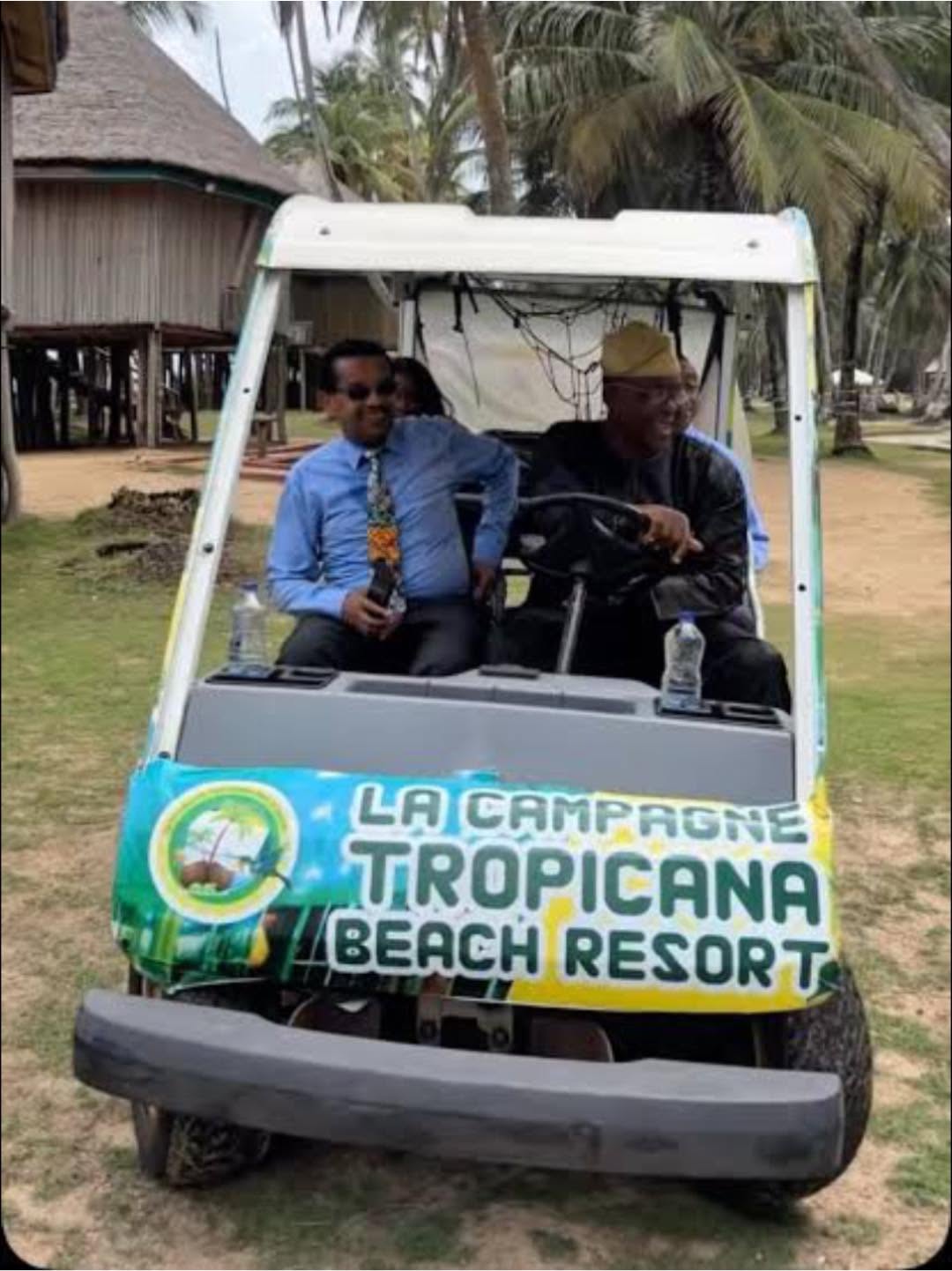

La Campagne Tropicana has stood as one of Africa’s most innovative tourism brands, transforming from a vision into a globally recognized tourism destination.
Founded by Otunba Wanle Akinboboye, the resort has become a powerful case study for emerging tourism entrepreneurs, business leaders, and CEOs seeking to build sustainable brands in challenging environments.
One of the most important lessons from La Campagne Tropicana is the power of visionary thinking.
At a time when tourism in Nigeria largely followed Western models, Akinboboye introduced a distinctly African-themed resort concept that celebrated local culture, architecture using mats as ceiling, broom materials for cabanas, cuisine, music strictly based on languages, fashion, and traditions.
For entrepreneurs, this demonstrates the importance of creating products that reflect local identity rather than merely replicating foreign concepts. Innovation often comes from embracing uniqueness.
Building a world-class tourism destination in Nigeria came with significant obstacles, including infrastructure limitations, market skepticism, and funding challenges.
However, La Campagne Tropicana’s growth illustrates how resilience and persistence can overcome barriers.
Rather than viewing challenges as reasons to quit, the organization continuously adapted, invested in product development, and expanded its offerings.
This ability to remain focused despite setbacks serves as a valuable lesson for emerging CEOs navigating difficult business environments.
La Campagne Tropicana has consistently reinvented itself through the creation of new tourism products and experiences.
The organization has collaborated with governments, tourism stakeholders, investors, and cultural institutions to expand tourism development initiatives across Nigeria and beyond.
Examples include partnerships in Taraba State, Ondo State, and several African countries where the La Campagne model has inspired tourism projects.
Emerging CEOs can learn that collaboration often accelerates growth more effectively than working in isolation.
La Campagne Tropicana’s success proves that cultural heritage can be a profitable economic asset.
By integrating African traditions into hospitality experiences, the resort has demonstrated that tourism can preserve culture while generating employment and economic opportunities.
Perhaps the most significant lesson is the importance of long-term commitment.
While many businesses focus on short-term profits, La Campagne Tropicana has pursued a broader mission of transforming African tourism and changing global perceptions about Africa as a tourism destination for more than forty years.
This long-term vision has enabled the brand to remain relevant and influential over the years.