

By Onyekachi Victoria Philip
Nigeria’s higher education landscape is witnessing a major transformation as the Federal Government launches the country’s first Manufacturing Technology University Innovation Pod (Manu-Tech UniPod), an initiative designed to move universities beyond classrooms and research papers into real-world innovation, production and industrial development.
The facility was launched at the Michael Okpara University of Agriculture, Umudike (MOUAU), Abia State, which is a new chapter in Nigeria’s ambition to build universities that serve as engines of manufacturing, entrepreneurship and technological advancement.
Unlike the traditional university model focused mainly on academic learning, the Manu-Tech UniPod is structured to create a direct link between education, industry and economic growth by providing students, researchers and innovators with the tools to transform ideas into market-ready products.
Speaking at the official launch, the Minister of Education, Dr. Tunji Alausa, said Nigerian universities must evolve from being institutions that only produce graduates and academic publications into centres capable of creating industries, jobs and practical solutions to national challenges.
He described the initiative as a major step towards making innovation and production central to Nigeria’s education system.
“Our universities must become the birthplace of innovation, manufacturing and enterprise. Education must no longer be separated from production, research from industry, or knowledge from economic prosperity,” Alausa said.
The Manu-Tech UniPod is part of the Federal Government’s wider plan under the Renewed Hope Agenda of President Bola Ahmed Tinubu, which prioritises education reform, youth empowerment, innovation, industrialisation and economic diversification.
The facility is a partnership involving the Federal Government, the United Nations Development Programme (UNDP), the Tertiary Education Trust Fund (TETFund), Michael Okpara University of Agriculture, Umudike, and other stakeholders committed to strengthening Nigeria’s innovation ecosystem.
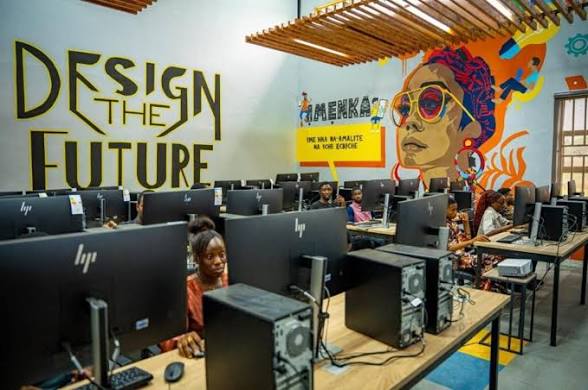
Equipped with emerging technologies including artificial intelligence, advanced manufacturing tools, agro-processing facilities, industrial automation, digital design and entrepreneurship support systems, the Innovation Pod allows innovators to develop ideas from research stages into prototypes, businesses and commercially viable products.
The choice of Abia State as the location for Nigeria’s first Manu-Tech UniPod is also strategic, as it connects university innovation with the state’s strong manufacturing identity, particularly the Aba industrial cluster known for indigenous production and entrepreneurial creativity.
Through this collaboration, the government hopes to combine academic research with local manufacturing expertise to promote Made-in-Nigeria products, improve value addition and position Nigerian businesses for greater opportunities under the African Continental Free Trade Area (AfCFTA).
Beyond serving as a university facility, Dr. Alausa described the Manu-Tech UniPod as a national development model that would be replicated across Nigeria’s geopolitical zones, with each centre focusing on the unique economic strengths and resources of its region.
The initiative also aligns with the Nigeria Education Sector Renewal Initiative (NESRI), which focuses on strengthening STEM education, Technical and Vocational Education and Training (TVET), digital learning, research commercialisation and quality assurance.
The Federal Government is also supporting young innovators through programmes such as the Student Venture Capital Grant Programme, aimed at helping students commercialise their ideas, and the Diaspora BRIDGE Programme, which connects Nigerian universities with global researchers and innovators.
With the launch of the first Manu-Tech UniPod, Nigeria is positioning its universities as more than centres of learning but as innovation factories capable of producing solutions, businesses and technologies that can compete globally.