

By Onyekachi Victoria Philip
For some tourism entrepreneurs, building a resort is more than putting up buildings. It is often a long fight against difficult locations, money problems, government regulations, changing markets and the pressure of keeping a dream alive when the expected results do not come quickly.

Across different parts of the world, some resort founders and developers started with ambitious visions but eventually had to stop, surrender their projects, lose ownership or walk away. Their experiences show just how difficult it can be to turn a remote piece of land into a successful tourism destination.

One of the recent examples is Bob Coughlin, founder of Turtlegrass Resort & Island Club in The Bahamas.
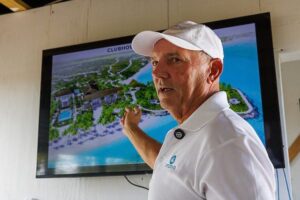
Coughlin spent more than two years developing an eco-resort in the Exumas, with sustainability and protection of the local environment at the centre of the project. However, in May 2026, construction was forced to stop following a government-issued cease-and-desist order connected to a dispute surrounding a neighbouring development.
Coughlin said the situation left him with no choice but to lay off 53 workers and place the resort project on indefinite hold. He subsequently shifted his immediate attention to developing his own residence and supporting cottages on the property.
In the United States, Tim Blixseth, founder of the Yellowstone Club in Montana, also experienced the collapse of a major resort venture.

Blixseth founded the exclusive private ski resort in 1997 on a large tract of land near Big Sky. The development became known for its luxury mountain lifestyle and wealthy membership.
But financial pressure eventually overwhelmed the business. The Yellowstone Club entered bankruptcy in 2008, and the property emerged under new ownership in 2009.
The collapse represented a major reversal for Blixseth, who had built the resort into an exclusive destination. Reports at the time said the club owed about $343 million to creditors, while the owners blamed difficulties in raising money and the burden of debt for the crisis.
Another example came from Rob McGrath, founder of Tanner & Haley Resorts in the United States.

McGrath launched the luxury destination-club business in 1998, creating a model that allowed members to access high-end vacation properties in different destinations.
The business expanded rapidly, but the model eventually ran into serious financial problems. In 2006, companies started by McGrath filed for Chapter 11 bankruptcy protection, leaving hundreds of members uncertain about their deposits.
There is also the case of Don Lessem, the dinosaur expert and founder of Earth Quest Adventures in Texas.

Lessem envisioned a huge tourism destination combining a theme park and other attractions. The planned development covered about 1,600 acres and was projected as a $500 million project.
But the ambitious resort was never completed, and the company behind the development eventually became bankrupt.
The story is particularly revealing because the project was built around a strong personal vision.
Lessem had a clear idea of what he wanted to create, but having an extraordinary concept was not enough to guarantee that the project would survive the financial and development challenges surrounding it.
A similar struggle occurred in Nicaragua, where Miami developers Ophir Sternberg and Ricardo Dunin spent millions attempting to transform a coastal property into a major ecotourism destination.

Their project was intended to become an attractive resort destination, but after about four years of efforts, the venture failed. The project was left with unfinished construction, debts, unpaid vendors and other financial problems.
The examples are different, but they share one important lesson: a tourism dream can be abandoned long before the dreamer runs out of ideas.
Some founders were defeated by debt. Some faced regulatory obstacles. Others struggled with financing, while some discovered that a beautiful location did not automatically translate into a viable tourism business.
That is why the story of Otunba Wanle Akinboboye and La Campagne Tropicana can be viewed from a different perspective.

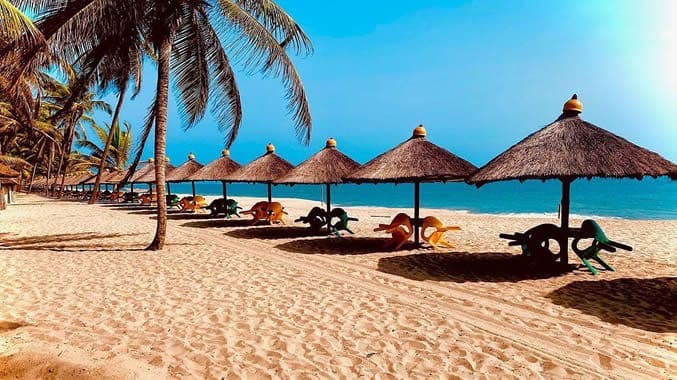
Akinboboye’s journey into tourism began decades ago, with the development of La Campagne Tropicana in Ibeju-Lekki, an area that was far removed from the established luxury tourism environment of Lagos at the time.
Accounts of his early journey describe skepticism surrounding his decision to develop the location and the difficulties involved in turning the area into a tourism destination.
What separates his story from many failed resort ventures is not the absence of difficulties. Rather, it is the length of time he has remained committed to the idea.
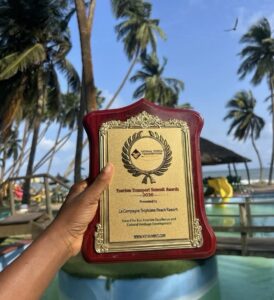
While some resort founders eventually surrendered their projects to bankruptcy, investors, governments or new owners, Akinboboye continued expanding the tourism vision around La Campagne Tropicana over the decades.
The comparison therefore goes beyond money or the size of a resort.It is about persistence.
The history of tourism development around the world contains many ambitious people who saw an empty, difficult or underdeveloped location and imagined a destination that did not yet exist.

Some built for years before financial problems stopped them. Others were forced out by regulation or debt. Some watched their projects change hands after bankruptcy.
For Akinboboye, the significance of the journey is therefore not simply that he built a resort. It is that he stayed with the vision through the difficult years when walking away could have been the easier option.