
- They can breathe through their roots:
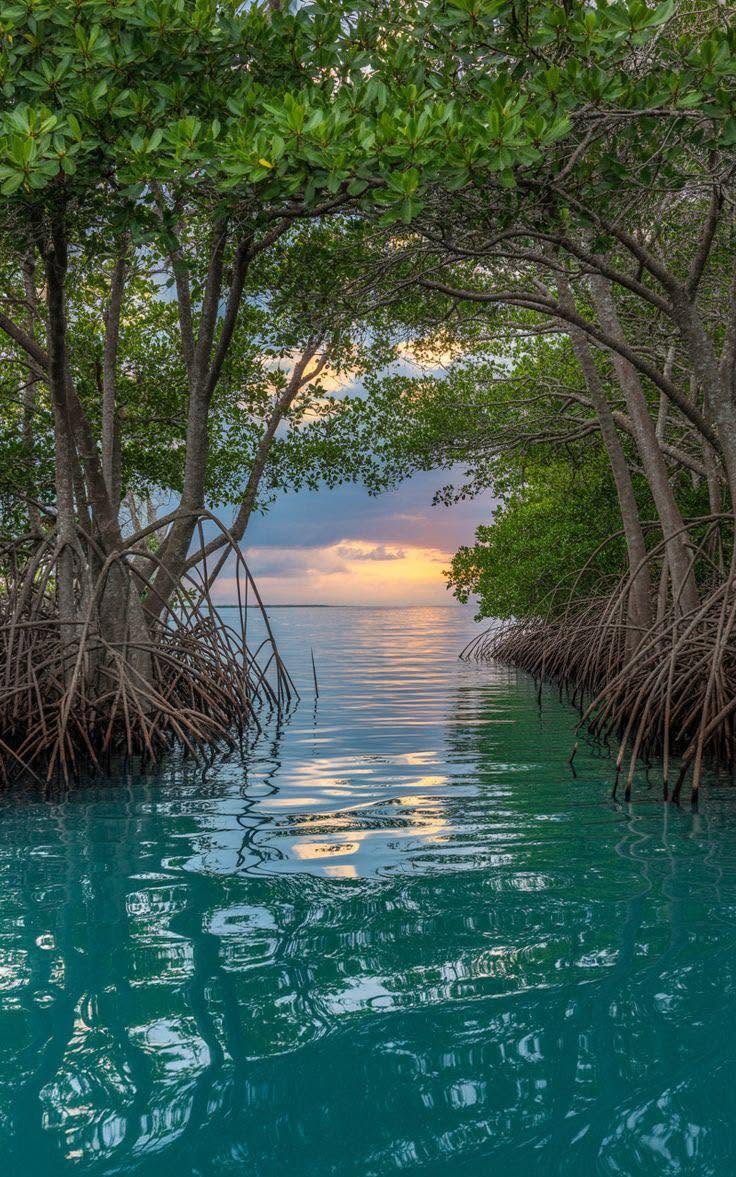
Mangroves survive in oxygen-poor mud by using special aerial roots (pneumatophores) that take oxygen directly from the air. - They filter salt like natural water machines:
Some mangroves block salt at the root level, while others excrete excess salt through their leaves. - They grow in moving land:
Mangrove forests often form in shifting muddy coastlines where land and sea constantly reshape each other. - They can survive in toxic soil:
Mangroves thrive in soil that would kill most plants due to low oxygen and high salinity. - They protect coastlines from storms:
Their tangled roots act like natural barriers that reduce wave energy and prevent erosion during storms and tsunamis. - They are nurseries of the sea:
Many fish, crabs, and shrimp species are born and grow inside mangrove forests before moving to open oceans. - They can grow upside down looking roots:
Some species, like red mangroves, grow prop roots that look like stilts holding the tree above water. - They store more carbon than rainforests (in soil): Mangrove soils trap massive amounts of carbon, making them one of the most powerful natural climate buffers.
- They can change their leaf strategy:
When salt levels get too high, mangroves may shed old leaves to protect themselves from salt stress. - They communicate through chemical signals:
Like many plants, mangroves can send chemical warnings to nearby trees when under stress or attack. - They support hidden food chains:
Algae growing on mangrove roots feed small organisms, which then feed fish and birds, creating a full ecosystem cycle. - Some mangroves walk slowly over time:
As sediment shifts, mangroves expand seaward by dropping new roots that anchor into new ground.
UNKNOWN FACTS ABOUT MANGROVES
