
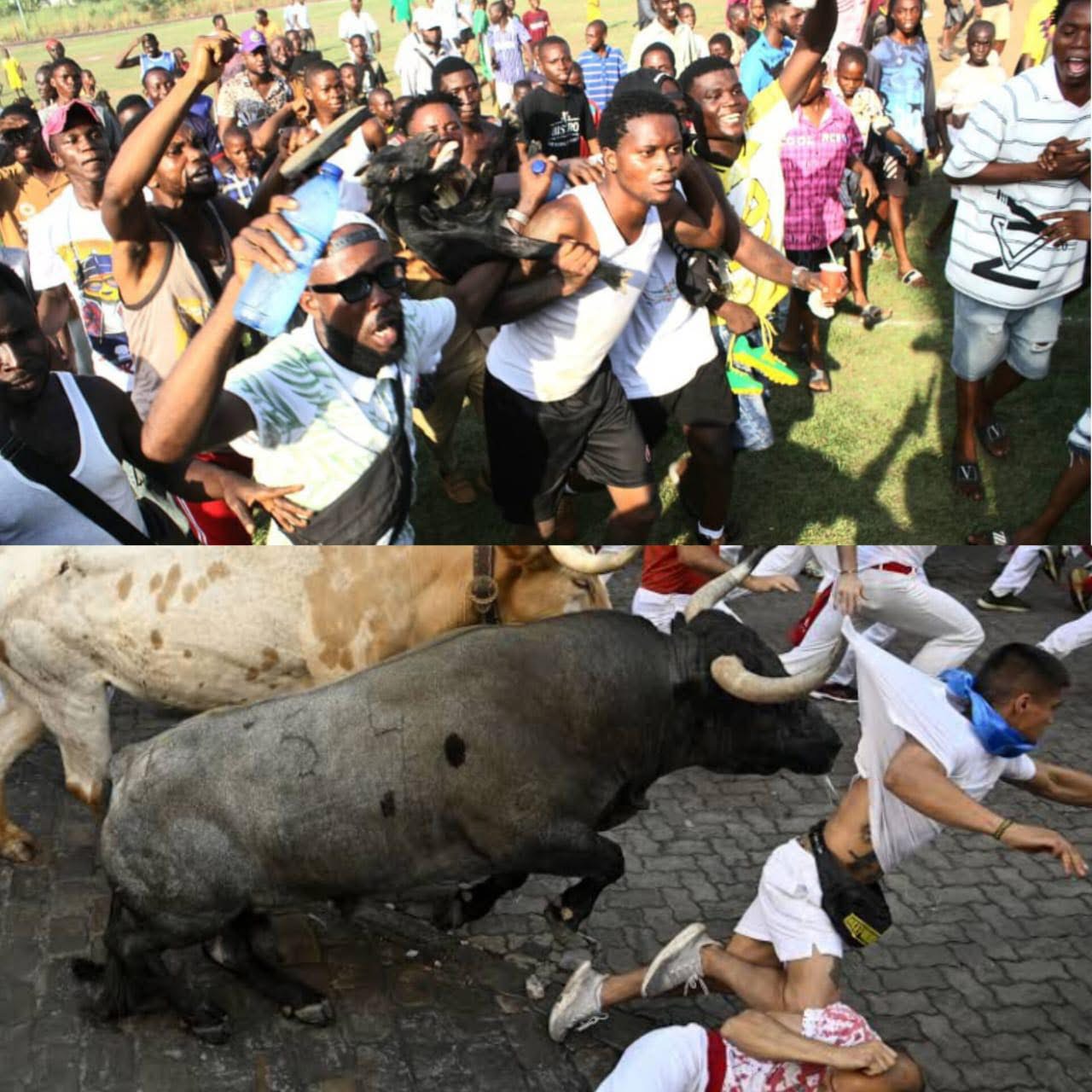

The rise of the Asun Goat Chasing Competition in Ondo State is gradually beginning to spark comparisons with the legendary Spanish bull runs, and many believe the creativity behind the event could transform it into one of Africa’s most talked about cultural entertainment festivals.
Popularly compared to the Spanish Encierro which is known as the Running of the Bulls in Pamplona, Spain, the Ondo event reveals a different but equally captivating side of human excitement, animal instinct, culture and entertainment.
While the Spanish tradition involves furious bulls racing through narrow streets as thousands run for survival, the Asun Goat Chasing Competition flips the narrative into a thrilling pursuit where energetic goats become the unexpected stars of the show, outsmarting massive crowds in dramatic fashion.
Reports from the event revealed scenes filled with laughter, adrenaline, suspense and chaos as goats reportedly escaped skilled chasers, zigzagged through crowds and even ran off the stage area entirely, leaving spectators roaring in excitement.
The unpredictability instantly became part of the attraction.
Just as Spain’s bull runs grew from an old tradition of moving bulls into marketplaces and bullrings centuries ago, the Asun Goat Chasing Competition is deeply rooted in Yoruba cultural identity through “Asun,” the famous spicy roasted goat meat delicacy loved across southwestern Nigeria.
Among the Yoruba people, goat meat is not merely food, it is strongly connected to celebration, hospitality, nightlife gatherings, ceremonies and social bonding.
Asun itself has become one of the most recognized street delicacies associated with enjoyment, relaxation and entertainment culture.
The competition creatively transforms that familiar cultural identity into a live sporting and entertainment experience.
What makes the Ondo super goat chasing competition even more remarkable is that, despite limited publicity and being hosted outside Nigeria’s major commercial centers, it reportedly attracted tens of thousands of spectators from different locations.
Such turnout has led many to wonder how massive the event could become with stronger media exposure, sponsorships and international tourism packaging.
The comparison with Spain becomes even more fascinating when considering accessibility and public participation.
The Spanish bull runs, although globally famous, are considered extremely dangerous due to frequent injuries caused by charging bulls, trampling and horn attacks.
Many spectators prefer watching from balconies and protected areas rather than participating directly.
The Asun Goat Chasing Competition, on the other hand, carries a far lighter atmosphere.
While chaotic and physically demanding, goats naturally present less danger than raging bulls, making the event more inviting for broader participation among youths, tourists and first-time attendees.
This creates the possibility of building not just a spectator festival, but a people-centered interactive entertainment culture.
Many attendees have described the competition as a raw display of instinct between man and animal, a moment where strategy, speed, excitement and unpredictability collide in real time.
It captures the same adrenaline filled tension that makes the Spanish bull runs globally yet presents it in a uniquely African and culturally creative way.
The visionary behind the concept, Wanle Akinboboye, may have tapped into something far bigger than ordinary entertainment.
By blending humor, culture, food identity, crowd engagement and live action, the event has the ingredients of a future tourism phenomenon capable of placing Ondo State on the global cultural entertainment map.
Whether it eventually reaches the worldwide fame of Pamplona remains to be seen, but one thing is already becoming clear…the Asun Goat Chasing Competition is no longer being viewed as just a local show. It is gradually evolving into a cultural experience that reflects creativity, African identity, tourism potential and the timeless fascination between human daring and animal instinct.