

By Onyekachi Victoria Philip
For 10 days, a quiet corner of Lagos became a little piece of Calabar….
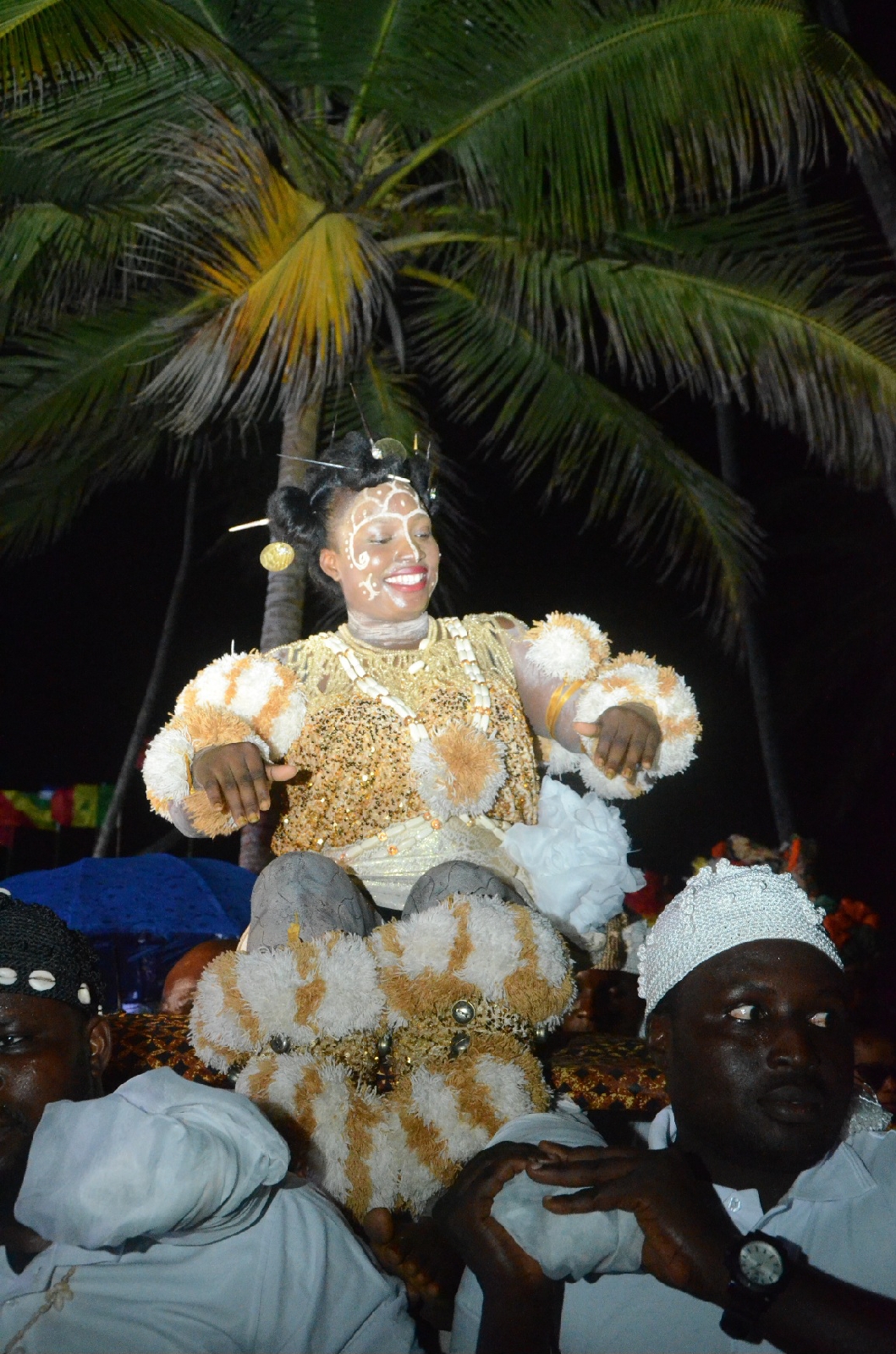
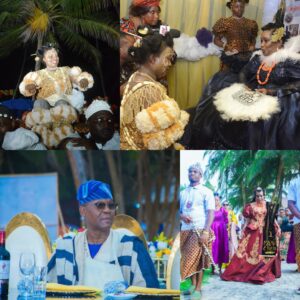
At La Campagne Tropicana Beach Resort in Ikegun, Ibeju-Lekki, Lagos, the familiar sounds of the city gave way to Efik songs, traditional dances, cultural instruction, sumptuous meals, beauty rituals and the careful supervision of older women as an Efik maiden underwent a practical demonstration of one of the culture’s most distinctive rites of passage, Nkuho, popularly known as the Fattening Room.
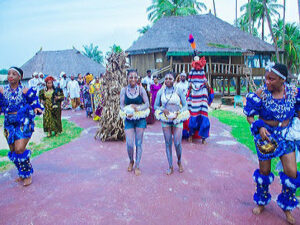
The presentation formed part of the cultural programme of the 2025 IPADA Initiatives Celebrations, where Her Majesty Queen Aruk II, Barrister Marie Ikpeme Erete, brought together a large cultural delegation from her kingdom, including dancers, singers, maidens, princesses and other cultural custodians. Contemporary reports from the event described the Nkuho exhibition as a major cultural attraction at the celebration.
For the first time, visitors who had heard the expression “Fattening Room” but had little or no understanding of what it actually meant could walk into a living cultural presentation and see the tradition interpreted before them.

The 10-day Lagos experience was not intended to reproduce every aspect of the historical practice. Traditionally, Nkuho could last for considerably longer depending on the community, family and circumstances while the Lagos presentation compressed the experience into a practical period that visitors could observe within the duration of the IPADA celebration.
In other words, the maiden was not simply being “fattened” for entertainment.
The exercise was designed to show people what the tradition means.
And to understand why an Efik maiden would traditionally enter a Nkuho, one has to travel beyond Lagos to Calabar and back into the social history of the Efik people.
More than a room where a girl gains weight, the phrase “Fattening Room” can be misleading.
To someone encountering the concept for the first time, it may sound like an unusual beauty treatment in which a young woman is simply kept indoors and fed until she becomes bigger.
But Nkuho was much more complicated.
It was traditionally a period of seclusion, nourishment, grooming, education and transition from maidenhood to womanhood.
Research into the Efik tradition describes the institution as a form of cultural education in which a young woman was prepared for marriage and taught knowledge considered necessary for managing her future home and marital responsibilities.
The physical transformation was certainly important.
Historically, a fuller body could represent beauty, health, prosperity and readiness for womanhood. The maiden was therefore deliberately nourished, allowed to rest and given foods intended to help her gain weight.
But beneath that physical transformation was another kind of preparation.
She was being taught.
She was being groomed.
She was being introduced to the responsibilities that traditional Efik society associated with adulthood and marriage.
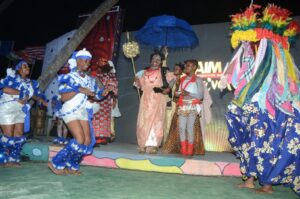
That is why some modern Efik custodians describe Nkuho as a finishing school for the would-be bride. Queen Aruk II herself described the institution in those terms when discussing the tradition during the IPADA celebrations.
Inside the traditional Nkuho
Traditionally, the maiden entered a specially designated space where she was separated from her ordinary routine.The seclusion was deliberate.
Instead of participating fully in everyday household activities, she became the centre of attention and care. Older women took on the responsibility of guiding her through the period.
She was fed generously.
She was massaged.
She was groomed.
Her skin and body received attention.
And she listened.
The older women passed down knowledge about womanhood, marriage, household management, food preparation, personal conduct, relationships and cultural values.
The process therefore created an important link between generations.
A young woman learned from women who had already lived through marriage, motherhood and the responsibilities of running a household.
Academic fieldwork involving Efik women found that memories of the tradition included learning traditional foods, domestic knowledge, cultural practices and other forms of preparation for adult life.
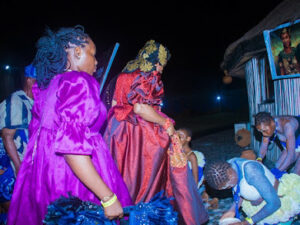
The Nkuho was thus simultaneously a place of pampering and discipline.
The maiden was pampered physically, but she was also being disciplined culturally through instruction.
The maiden was deliberately nourished with substantial meals. Traditional accounts and cultural descriptions mention foods such as yam, plantain, fufu and rich soups among the foods associated with the practice.
In the historical Efik worldview, gaining a fuller figure could signify that a woman was healthy, well cared for and ready for marriage and motherhood.
The food was therefore not merely about satisfying hunger.
It was part of the visual and cultural transformation expected at the end of the seclusion.
This is one reason the expression “fattening room” survived.
But reducing the entire institution to eating misses the greater story.
A woman could leave the Nkuho having gained weight, but she was also expected to leave with knowledge.
The beauty room
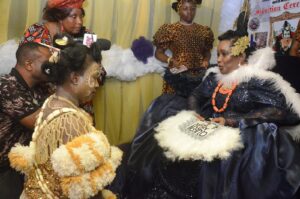
Another striking part of the tradition was personal grooming.
The maiden received regular massages and beauty treatments. Historical accounts describe the use of traditional preparations, including white chalk and plant-based substances, as part of body decoration and skincare.
Beauty had a cultural language of its own.
The skin, hair, body shape, clothing and adornments could all contribute to the appearance of the maiden when she eventually emerged from seclusion.
The process was therefore a complete transformation,physical, social and cultural.
At the Lagos presentation, this aspect helped visitors understand why traditional women spent considerable time caring for the maiden.
What might appear to a modern observer as excessive pampering was historically part of a larger cultural statement:
the maiden was valuable, and the community was investing in her transition into womanhood.
The classroom inside the Fattening Room
Perhaps the most important lesson of Nkuho was not delivered through food or massage.
It was delivered through conversation.
Older women became teachers.
They taught the maiden how to prepare food, care for a home, conduct herself in marriage and understand the expectations placed upon a wife and mother in traditional society.
Songs, stories, dances and cultural knowledge could also form part of the transmission.
This explains why the Nkuho can be understood as an indigenous educational institution.
It was a classroom without desks.
The teachers were experienced women.
The curriculum was culture.
And the examination was ultimately her ability to emerge into society as a woman who had acquired the knowledge her community expected her to possess.
Then came the public emergence
The most dramatic moment was the maiden’s emergence from seclusion.
After spending the required period undergoing her transformation, she would appear before the community dressed and adorned for the occasion.
Family members, friends and members of the wider community could gather to witness the new stage of her life.
The coming-out ceremony was therefore not simply the end of a period of eating and grooming.
It was the public unveiling of a transformed woman.
This element was particularly important to the Lagos presentation because it allowed people unfamiliar with Efik culture to understand the complete journey rather than seeing only isolated activities inside the room.
What happens in Calabar?
To understand the Lagos presentation properly, one must understand that the tradition belongs to a much older cultural environment in the Cross River region.
The Efik people are historically associated with Calabar and surrounding communities in Cross River State, with Old Calabar serving as a major centre of Efik society and history.
In traditional Calabar communities, Nkuho was not staged for tourists.
It was part of community life.
A maiden would enter the period of seclusion under the supervision of older women. Her family and community would participate in preparing for the eventual celebration.
The experience could involve substantial feeding, body care, instruction, songs and dancing.
The length of the traditional process varied, and historical accounts describe periods ranging from months to much longer depending on circumstances. Modern presentations should therefore not suggest that every Efik woman historically spent the same amount of time in the room.
The important point is that the longer period allowed the transformation to unfold gradually.
The maiden had time to gain weight, learn, listen, practise and become accustomed to the expectations of womanhood.
Calabar’s celebration was a community affair
The eventual emergence was not something that happened quietly.
It could become a major social occasion.
The maiden’s family celebrated her transformation while members of the community came to witness the occasion.
And the maiden herself became the centre of attention.
Ekombi and the language of dance
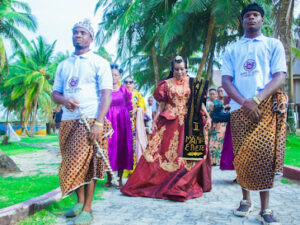
Dance gives another window into the cultural world surrounding the tradition.
The Efik are known for rich musical and dance traditions, and Ekombi is among the best-known dances associated with the Efik cultural identity.
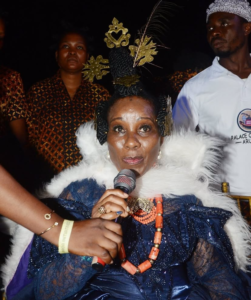
The role of Queen Aruk II
The involvement of Queen Aruk II gave the Lagos presentation another dimension.
Rather than presenting the Nkuho as an abstract museum display, she brought a cultural delegation connected to her kingdom, including more than 100 cultural performers and custodians, according to reports from the IPADA exhibition.
The result was a meeting between heritage and tourism.
Visitors could see the costumes.
They could hear the songs.
They could watch the dances.
They could observe the preparation of the maiden.
And, most importantly, they could ask what the tradition meant.
That distinction matters.
Cultural tourism is strongest when people are not simply shown an object but are allowed to understand the story behind it.
Why bring Nkuho to Lagos?
The answer lies in the changing nature of cultural heritage.
Many traditional practices have weakened as urbanisation, Christianity, Western education, modern employment and changing ideas about marriage and gender roles have transformed Nigerian society.
Research on Nkuho has similarly found that the practice is declining and changing under the pressure of modern life.
A young woman living and working in a modern Nigerian city cannot necessarily disappear from society for the length of time that traditional Nkuho sometimes required.
Consequently, contemporary cultural presentations have an important role to play.
They can preserve the knowledge and meaning of the tradition without pretending that modern life is identical to precolonial life.
That was precisely what made the 10-day Lagos practical experience significant.
From Calabar to Lagos — and now to the world
The significance of the Nkuho presentation at La Campagne Tropicana goes beyond the ten days spent nourishing one maiden.
It represents an attempt to take a cultural institution that many Nigerians know only by name and explain its deeper meaning to an international audience.
At La Campagne Tropicana, an African-themed forest, river and beach resort in the Ibeju-Lekki area of Lagos, the tradition was placed within a tourism environment designed to bring visitors close to African cultural experiences.