

By Onyekachi Victoria Philip
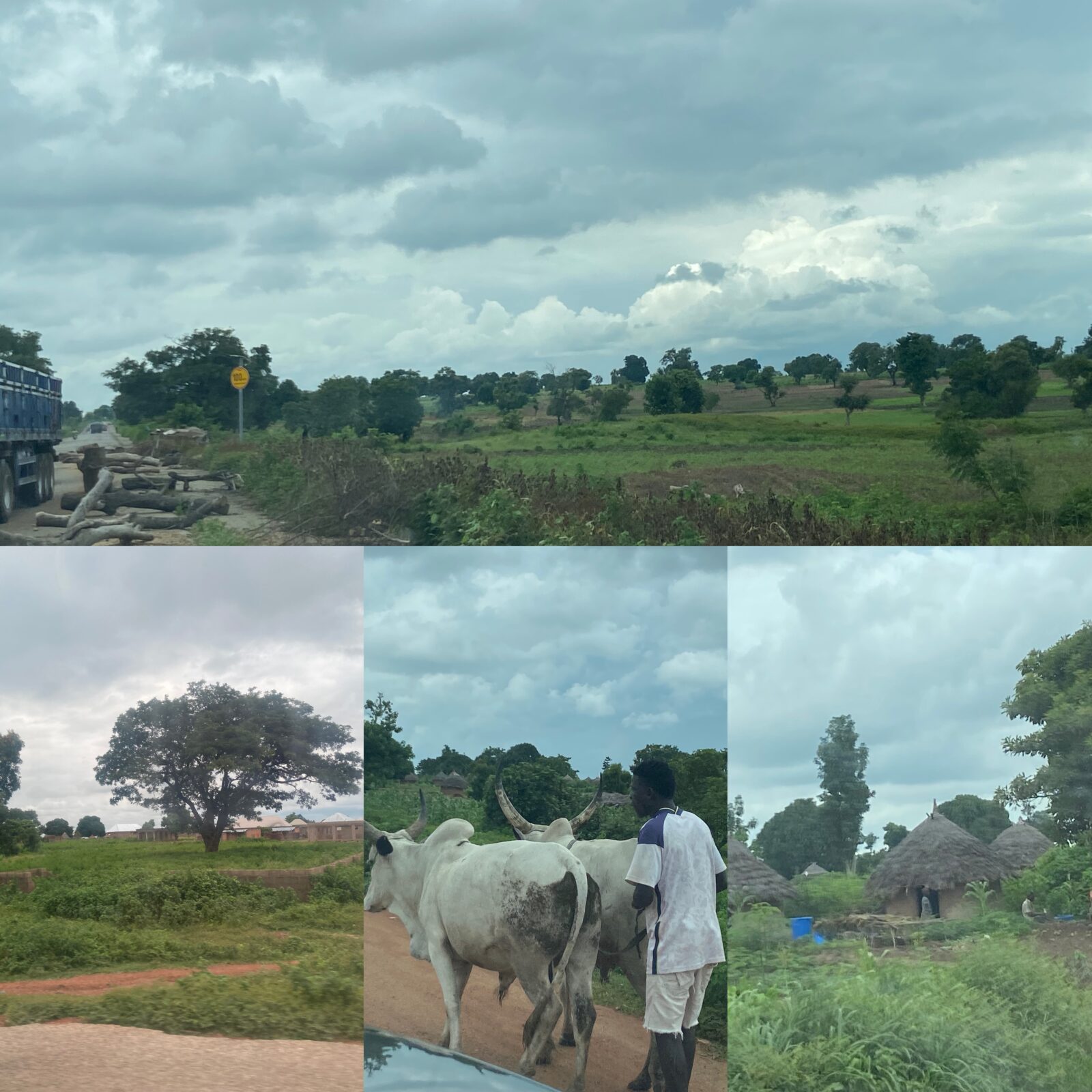
The journey from Wukari to Jalingo is more than a long stretch of road cutting through Taraba State. It is a gradual passage through changing landscapes, where the character of the environment seems to shift with every kilometre.
Leaving Wukari behind, the first plane of the journey opens into a greener, more wooded landscape. Trees, shrubs and pockets of denser vegetation line parts of the route, creating a natural corridor of greenery that reflects the wider vegetation diversity of Taraba State.
Then, almost gradually rather than suddenly, the landscape begins to open.
The trees become more scattered. The horizon widens. Long stretches of grasses and cultivated fields begin to dominate both sides of the road, introducing travellers to the expansive character of the savannah.
This is where the second plane of the journey emerges.
Across the landscape, green fields stretch beneath the sunlight, interrupted by scattered trees and shrubs. The open terrain creates a sense of space while the changing vegetation tells a quiet ecological story of the transition between wooded areas and savannah landscapes.
The scenery is particularly striking because it does not arrive as a dramatic boundary. Instead, the forested and wooded character gradually gives way to open savannah, reflecting the forest, savannah transition found across parts of Northern Taraba.
For travellers heading towards Jalingo, the road therefore becomes something of a moving window into the region’s natural geography.
One moment, vegetation appears thick enough to frame the road, next, the landscape stretches outward into broad fields and grass-covered plains, with sunlight falling across the vegetation and the distant horizon appearing almost uninterrupted.
It is a landscape that reveals another side of Northern Nigeria, one beyond the familiar images of cities, markets and busy highways.
Here, nature takes centre stage.
The long road from Wukari to Jalingo becomes a passage through two visual worlds, the greener, wooded terrain that introduces the journey and the expansive savannah that gradually takes over as the road moves deeper into Taraba.
And somewhere between those two landscapes lies the quiet beauty of the journey itself, the trees, the fields, the open skies and the peaceful northern scenery that travellers may see through a vehicle window but rarely stop to understand.